Quick Answer
What's the difference between traditional and white buffalo sauce?Traditional buffalo sauce is Frank's RedHot + butter — orange-red, vinegar-forward, clean heat. White buffalo sauce is a cream-based sauce (heavy cream, cream cheese, or ranch + hot sauce + garlic) — white or pale yellow, richer, milder, more dairy-forward. Traditional buffalo has the authentic flavor that defines the wing tradition. White buffalo is a milder, creamier alternative for heat-averse guests and applications where cream sauce fits better (pasta, pizza, flatbreads). Neither is better — they're genuinely different sauces for different purposes.
What Each Sauce Actually Is
Traditional Buffalo Sauce
The original: Teressa Bellissimo's 1964 Anchor Bar recipe used Frank's hot sauce (or a similar cayenne sauce) combined with margarine, mixed and cooked briefly. Modern home versions use butter instead of margarine. The sauce is an oil-in-water emulsion: the vinegar in hot sauce provides the aqueous phase; the butter provides the fat phase; agitation (whisking) creates the emulsion.
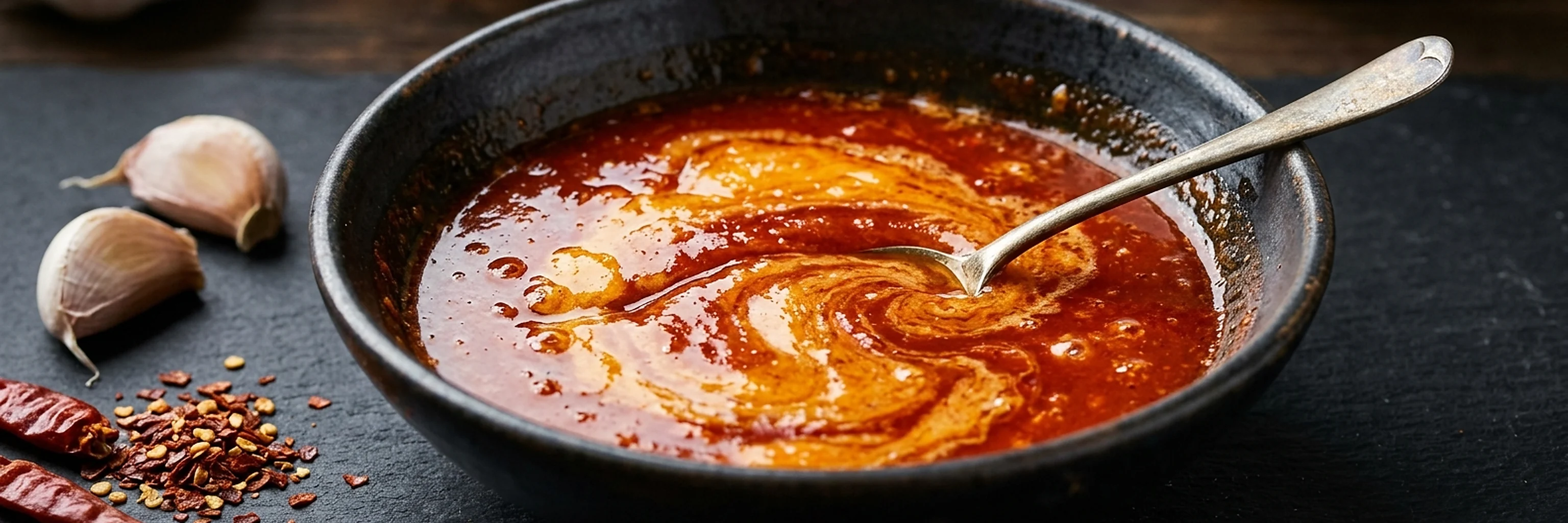
Result: orange-red, glossy, tangy, buttery, with building cayenne heat. The vinegar character defines it.
White Buffalo Sauce
A cream-based variation with hot sauce incorporated. No single "original" recipe — it's a category of cream sauces that contain buffalo sauce elements. Common formulas:
- Heavy cream + hot sauce + garlic + Parmesan reduction
- Ranch dressing + cream cheese + Frank's (no-cook version)
- Butter + heavy cream + hot sauce + blue cheese crumbles
Result: white to pale yellow, rich, creamy, milder heat (dairy buffers capsaicin), complex dairy flavor alongside the hot sauce.
| Feature | Traditional Buffalo | White Buffalo Sauce |
|---|---|---|
| Color | Orange-red | White to pale yellow |
| Fat base | Butter (emulsified) | Cream/cream cheese + butter |
| Heat level | Medium (standard ratio) | Mild-medium (cream buffers heat) |
| Dominant flavor | Vinegar + cayenne | Cream + garlic + mild heat |
| Stability | Breaks above ~185°F | More heat-stable (more fat) |
| Calorie density | Moderate | High |
| Best applications | Wings, toss sauce | Pasta, pizza, dipping, gratin |
| Familiarity | Very high — restaurant standard | Less common but growing |
Flavor Comparison
Traditional: Bright, Sharp, Vinegar-Forward
The vinegar in Frank's creates an immediate bright acidity that's the defining character of traditional buffalo sauce. It's unapologetically tangy. The butter adds richness and rounds the vinegar's edge, but the acid leads. The heat builds moderately and has staying power. This is the flavor that defines "buffalo" in the cultural sense.
White: Rich, Creamy, Heat as Background
Heavy cream and butter create a richer, more substantial mouthfeel. The hot sauce's acidity is substantially muted by the dairy — the fat physically coats the palate, reducing capsaicin's interaction with receptors. The result is a sauce where cream, garlic, and dairy character lead, with heat as a warm background note rather than the featured element. More similar to a cream sauce with heat than a hot sauce with cream.
Best Applications for Each
Traditional Buffalo excels at:
- Wings (the original application — tradition exists for a reason)
- Any protein that benefits from the bright acidity cutting through fat (fried chicken, pork)
- Dipping sauce (bright, doesn't coat the palate too heavily for repetitive dipping)
- Applications where color matters (the orange-red is visually "buffalo")
White Buffalo excels at:
- Pasta sauce (cream sauce format works naturally in pasta applications)
- Pizza and flatbread sauce (white pizza with buffalo chicken is a classic combination)
- Dipping sauce for guests who find traditional buffalo too acidic
- Gratin and casserole applications where cream integration is needed
- Buffalo cauliflower (the richness pairs better with mild vegetables than the sharp traditional version)
💡 Serving Both at Wing Night
Offering both traditional and white buffalo sauce at a wing night is an excellent strategy for mixed groups — it covers guests who want classic and guests who want something milder without setting up a separate sauce station. The visual distinction (orange-red vs. white) makes them immediately identifiable. White buffalo sauce also functions as both a wing sauce and a dip, reducing the number of separate dips needed. See the wing night at home guide for sauce station setup.