Quick Answer
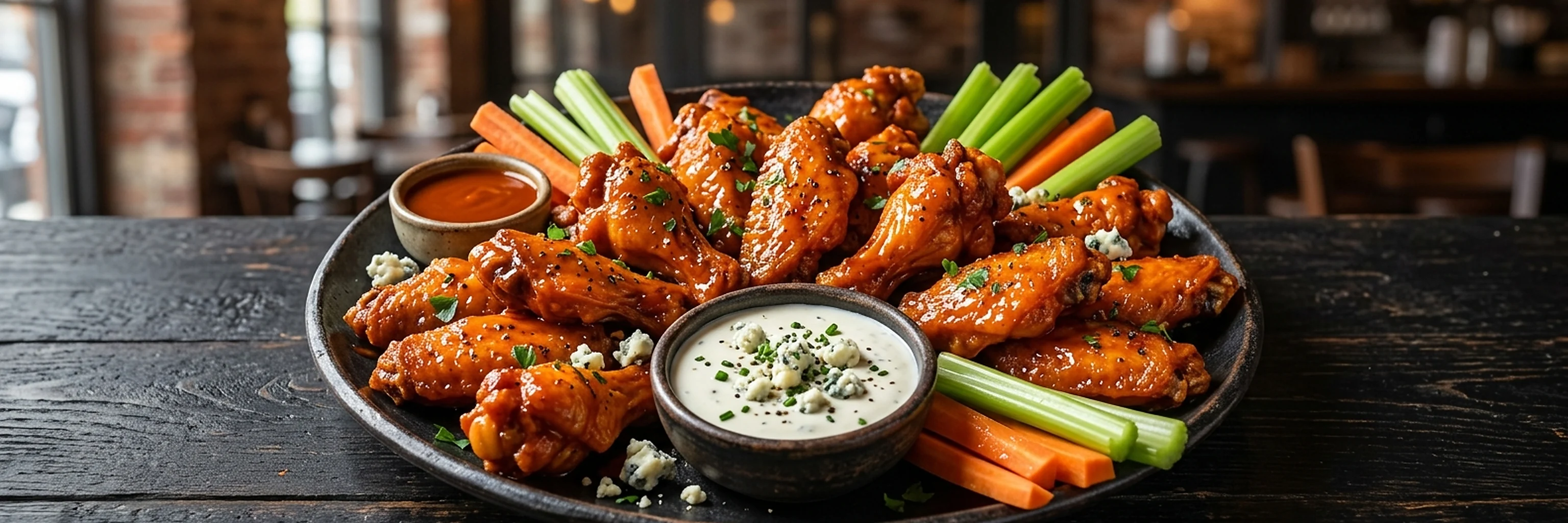
How do you plan and run a wing night at home?The core logistics: buy 1 lb wings per person as a main course (0.5 lb per person as an appetizer), cook in batches at 425°F on a wire rack (don't crowd), stagger batches 15 minutes apart so you're delivering fresh wings throughout the event rather than all at once. Keep cooked unsauced wings warm in a 200°F oven; sauce just before serving. Set up a sauce station (2–3 sauce options), a dip station (blue cheese + ranch), and classic sides (celery, carrots, coleslaw, fries or cornbread). The key insight: serve wings in waves rather than all at once — this keeps them hotter and extends the eating event.
Quantities: How Many Wings to Buy
| Group Size | Wings as Main | Wings as App | Sauce Needed | Sides Needed |
|---|---|---|---|---|
| 2 people | 2 lbs | 1 lb | 1 batch sauce | Celery, 1 dip |
| 4 people | 4 lbs | 2 lbs | 2 batches | Full side spread |
| 6 people | 6 lbs | 3 lbs | 3 batches | Full side spread + extra |
| 10 people | 10 lbs | 5 lbs | 5 batches | Multiple sides, stagger cooking |
| 20+ people | 20+ lbs | 10+ lbs | Prep sauces in large batches | Multiple sides + roaster oven |
The 1 lb per person estimate for wings as a main course assumes party wings (not whole wings) at average serving size. Some guests eat more, some less — the estimate is reliable for planning. If you're adding substantial sides (fries, coleslaw, cornbread, other proteins), reduce wing quantity to 0.75 lb per person.
Wing Night Timeline
3–24 Hours Before
- Pat wings dry and coat in baking powder + salt + garlic powder
- Place on wire racks, refrigerate uncovered (the overnight dry-brine dramatically improves crispiness)
- Make blue cheese dip — it needs at least 2 hours to develop flavor
- Prepare any make-ahead sides (coleslaw, for example, improves with a few hours of rest)
2 Hours Before
- Pull wings from refrigerator — let sit at room temperature for 30 minutes (not necessary but takes the chill off evenly)
- Prep sauce ingredients (measure out Frank's, soften butter to cold-but-not-frozen)
- Prep all sides and set the table/serving area
- Cut celery and carrots; arrange on serving platters
1.5 Hours Before
- Preheat oven to 425°F
- Start first batch — largest, thickest wings go in first
45 Minutes Before
- Start second batch (stagger if cooking large quantities)
- Make buffalo sauce(s) — can be held warm on lowest heat
As Guests Arrive / Game Starts
- Serve first round of wings (tossed in sauce just before serving)
- Keep remaining unsauced wings in 200°F oven
- Sauce and serve in waves every 15–20 minutes
The Sauce Station Setup
A two- or three-sauce setup dramatically improves wing night for groups with different heat preferences:
- Sauce 1 — Mild/Classic: Standard Frank's + butter, or a honey buffalo for those who want less heat
- Sauce 2 — Medium/Hot: Frank's + butter at a 1:1 ratio (less butter = more heat), or add cayenne to the classic recipe
- Sauce 3 — Nuclear (optional): Frank's + habanero sauce + minimal butter for heat seekers
Keep sauces in small heavy-bottomed pots over very low heat to maintain temperature. Label clearly. Provide a large bowl for tossing + tongs for transferring wings to individual plates.
Sides, Dips, and Drinks
Classic wing night sides, in order of importance:
- Celery and carrot sticks (essential): The crunch and coolness counterbalances wing heat and cuts through the butter. Cut sticks generously — people eat more than you expect.
- Blue cheese dip (essential for purists): The classic pairing. See the wing dipping sauce guide for a recipe.
- Ranch dressing (essential for non-blue-cheese folks): Half your guests will prefer ranch — having both is non-negotiable for a crowd.
- Coleslaw: The cool, creamy coleslaw provides contrast to the hot, acidic wings. Makes the wing-eating experience more sustainable over a long game.
- Fries or wedges: Thick-cut fries, potato wedges, or sweet potato fries work well. Serves as the "filler" that extends the meal.
- Cornbread: Underrated wing night side. The slightly sweet, crumbly bread is an excellent heat absorber between wings.
Drinks: cold beer (lager or IPA depending on heat preference — IPA's bitterness pairs well with spicy food), iced water (non-carbonated is most effective for capsaicin management), and full-fat dairy drinks for heat-sensitive guests (milk or a cold shake — the fat binds capsaicin better than water).
Keeping Wings Hot for a Crowd
The challenge of wing night for larger groups: cooking takes time, but you want hot wings throughout the event, not all at once.
- Holding oven: Keep cooked but unsauced wings in a 200–225°F oven. They hold well for 30–45 minutes without significant quality loss. Sauce just before serving — sauced wings sitting in heat lose their crispiness faster.
- Sauce in waves: Rather than saucing all wings at once, sauce 1/3 at a time every 15–20 minutes. Each wave is freshly sauced and immediately served.
- Roaster oven for large groups: For 15+ people, a roaster oven set to 200°F is an excellent holding vessel for unsauced wings — much more capacity than a standard oven.
- Chafing dishes: For party setups, chafing dishes with Sterno cans keep sauced wings warm for service, though the steam from the chafing dish will soften crispy skin over time (acceptable for 20–30 minutes, not ideal longer).
⚠️ Food Safety for Wing Events
Wings must stay above 140°F during the event to remain in the safe temperature zone. Don't leave cooked wings sitting at room temperature for more than 2 hours — bacterial growth accelerates between 40°F and 140°F. For events longer than 2 hours: keep wings in the holding oven rather than on the table; bring out in waves. Discard any wings that have been sitting at room temperature for longer than 2 hours (follow the 2-hour rule, not a "they still look fine" judgment).