Quick Answer
How do you make blue cheese buffalo sauce?Make standard buffalo sauce (Frank's + butter), then blend in 2–3 oz blue cheese crumbles and 2 tablespoons sour cream or cream cheese as a stabilizer. The blue cheese melts partially into the warm sauce, creating a creamy, chunky sauce with both the tang of hot sauce and the funk of blue cheese simultaneously. Use as a wing toss sauce (slightly thicker than standard) or as a dipping sauce. The sauce is best served fresh; it doesn't reheat as cleanly as standard buffalo sauce due to the dairy content.
Blue Cheese Inside the Sauce
The classic wing-eating experience has two separate components: buffalo-sauced wing + blue cheese dip. Blue cheese buffalo sauce combines them: the sauce applied to the wing itself contains blue cheese, so every bite has the complete flavor without dipping.
This works particularly well for:
- Situations where you don't want to deal with a separate dip bowl (casual eating, watching a game)
- Guests who want the complete buffalo + blue cheese flavor but always forget to dip
- Pasta and salad applications where you want both flavors integrated
- A sauce with a more complex flavor profile than standard buffalo for recipe variety
Blue Cheese Buffalo Sauce
Ingredients
- 1/3 cup Frank's RedHot Original
- 5 tablespoons unsalted butter
- 2–3 oz blue cheese crumbles (high quality — Gorgonzola or Roquefort preferred)
- 2 tablespoons sour cream
- 1/2 teaspoon garlic powder
- 1 teaspoon white wine vinegar
- Salt and white pepper to taste
Method
- Warm Frank's in a small saucepan over low heat.
- Remove from heat. Whisk in cold butter gradually until emulsified.
- Return to very low heat. Add blue cheese crumbles.
- Stir gently for 1–2 minutes — the blue cheese will melt partially but some chunks should remain.
- Remove from heat. Stir in sour cream.
- Add garlic powder, white wine vinegar, salt, and pepper.
- Use immediately — toss wings in the warm sauce. The sauce will thicken as it cools.
Tips
- Quality of blue cheese matters significantly here — since the blue cheese is a featured flavor, good Gorgonzola or Roquefort makes a noticeably better sauce than generic crumbles.
- Don't over-melt the blue cheese — partial melting leaves texture pockets. If it melts completely smooth, it's better as a pure blue cheese dip than a wing toss sauce.
- The sour cream stabilizes the sauce and prevents the dairy from breaking. Without it, the blue cheese + butter can separate at higher temperatures.
Why This Sauce Is More Fragile Than Standard Buffalo
Standard buffalo sauce (hot sauce + butter) is relatively stable — an oil-in-water emulsion held by the vinegar's acidity. Blue cheese buffalo adds more dairy (sour cream, blue cheese), which:
- Makes the sauce thicker and richer
- Reduces its heat tolerance — dairy proteins curdle above 180°F
- Reduces its shelf life — the additional dairy components are more perishable
- Makes reheating trickier — reheat only on very low heat, stirring constantly
Use this sauce fresh, toss wings immediately, and serve promptly. Don't attempt to hold it warm for extended periods as you would standard buffalo sauce.
Uses and Applications
- Wing toss sauce: Toss freshly cooked wings in the warm sauce and serve immediately. The combination of hot sauce tang and blue cheese funk in the wing coating itself is genuinely excellent.
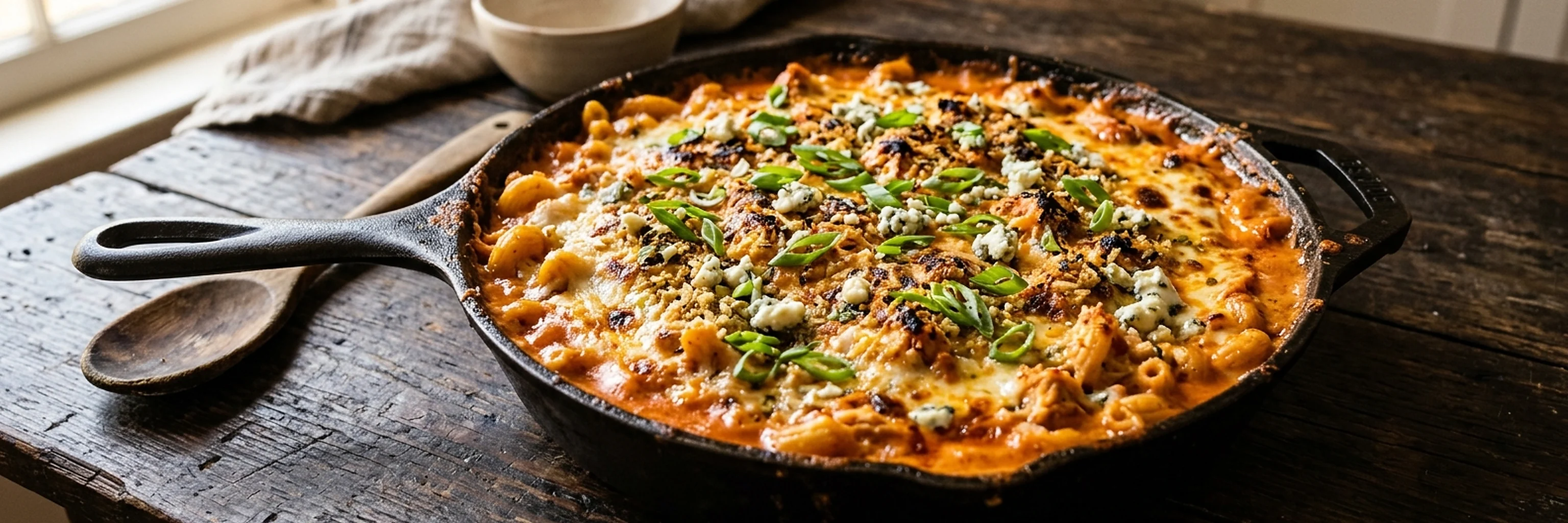
- Pasta sauce: Blue cheese buffalo is excellent over pasta with grilled chicken — the blue cheese creates a creamy sauce base while hot sauce provides heat. Similar to a spicy gorgonzola cream pasta.
- Steak topping: Serve as a compound butter-style sauce over grilled steak — the blue cheese + butter combination is classic steakhouse, with the hot sauce adding unexpected heat.
- Dipping sauce (served cold): Refrigerate and serve as a dipping sauce for vegetables or chips. Cold blue cheese buffalo sauce has a different texture (firmer, richer) than warm — similar to a chunky blue cheese dip but with hot sauce.
- Pizza sauce: Spread warm blue cheese buffalo sauce as a pizza base — top with chicken, mozzarella, and a drizzle of honey for a sweet-savory-blue cheese pizza.
💡 The Gorgonzola vs. Roquefort Decision
Different blue cheese varieties produce noticeably different sauces. Gorgonzola (Italian): creamier, milder, with a slightly sweet undertone — the most approachable blue cheese for those who find blue cheese strong. Roquefort (French, made from sheep's milk): more complex, saltier, more pungent — produces the most intensely flavored blue cheese sauce. Maytag Blue (American): bold, tangy, slightly crumbly — a strong flavor that holds up to the hot sauce. Danish Blue (affordable): mild and slightly salty — a good default when you want blue cheese flavor without overwhelming it. For this sauce: Gorgonzola produces the most universally liked result; Roquefort produces the most impressive and complex result for blue cheese enthusiasts.