Quick Answer
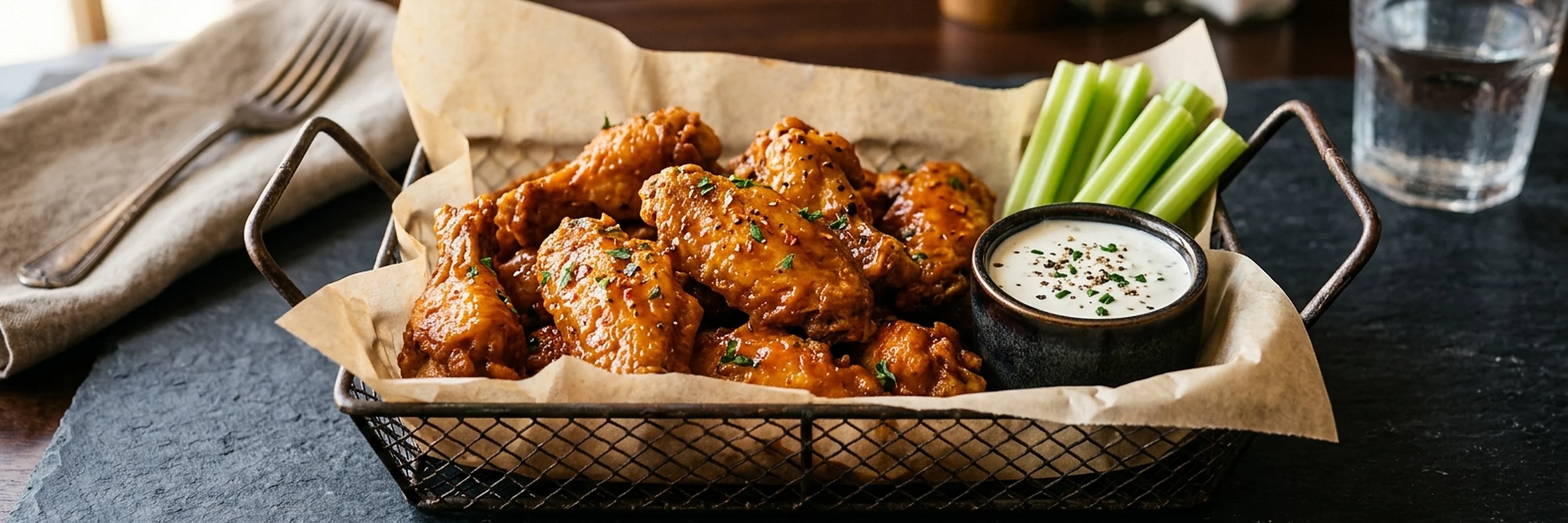
What's the best equipment for serving buffalo wings at a party?For serving wings at a party: a shallow wide platter or rimmed sheet pan for serving (wings spread out vs. piled, which keeps steam off the crispy skin), small individual ramekins or shot glasses for dipping sauces (blue cheese, ranch, extra buffalo), and either a warming tray/chafing dish or a 170°F oven to hold cooked wings. The biggest enemy of crispy wings on a serving table is steam from hot wings piled on top of each other — wide, shallow serving is key.
The Wing Serving Challenge: Crispy vs. Hot
The two things you want from serving wings — hot temperature and crispy skin — work against each other on a serving table. Hot wings generate steam; steam softens crispy skin. The solution is to choose serving equipment that:
- Allows air circulation around the wings (wide and shallow, not deep and piled)
- Holds heat without creating a steam environment
- Makes restocking from the kitchen easy for multiple batches
| Equipment | Best For | Price | Key Feature |
|---|---|---|---|
| Half-sheet pan (rimmed) | Serving, transport, holding | $10–15 | Low rim, air circulation |
| Ceramic platter (12–16") | Presentation, table serving | $20–40 | Heat-retaining, attractive |
| Warming tray (NutriChef, etc.) | Extended serving 2+ hours | $40–80 | Electric, adjustable temp |
| Chafing dish setup | Large party (50+ wings) | $25–60 per setup | Fuel or electric heat |
| Wire rack over sheet pan | Best crispiness retention | $15–20 combined | Air under wings prevents steaming |
| Ramekins (3oz) | Individual dipping sauces | $1–3 each | Portions control waste |
Serving Vessels
Best for home wing nights: wire rack on a rimmed sheet pan. This is the setup used in restaurant prep kitchens. The wire rack elevates wings above the pan surface — any dripping fat falls away and air circulates under the wings. The result is wings that stay crispier for 30–45 minutes on a warm surface compared to wings on a flat plate, where steam from the pan softens the bottom.
For presentation: large ceramic platter. Ceramic holds heat well (preheating the platter in a 200°F oven for 10 minutes before plating significantly extends how long wings stay warm) and looks better than a sheet pan on a dining table. Trade-off: more steaming, less crisp. For guests who eat quickly: fine. For a long grazing spread: wire rack is better.
For large parties: A chafing dish or warming tray allows continuous heat that prevents wings from dropping below 140°F food-safe temperature. Use a wire rack insert inside the chafing dish to preserve some airflow.
Keeping Wings Hot for Parties
For parties where guests will be eating over a 1–2 hour window, a dedicated strategy for keeping wings at temperature is more important than any specific piece of equipment:
- Batch-cook approach: Put out 30–40 wings at a time and keep remaining batches in a 170°F oven. Replenish every 20–30 minutes with fresh-from-oven wings. Smaller batches get eaten faster and stay crispy longer than one giant pile.
- Two-oven approach: If you have two ovens, one runs the active cooking temperature (400–425°F); the other holds finished batches at 170°F. This works for large wing night volumes.
- Air fryer for restocking: A countertop air fryer reheats leftover wings back to crispy in 5–6 minutes at 400°F — faster than the oven and produces better texture than microwave reheating.
⚠️ Food Safety: 2-Hour Rule
Buffalo wings at a room-temperature serving table enter the food safety danger zone (40–140°F) if they sit unheated for more than 2 hours total. For long parties: use a warming tray or chafing dish that maintains 140°F+, or rotate smaller batches from the oven. Wings that have been sitting unheated for more than 2 hours should be discarded, not reheated. This is especially important for wings that have been dressed with butter-based buffalo sauce (fat + protein combination that supports bacterial growth).
Dipping Sauce Setup
The standard wing night dipping sauces are blue cheese and/or ranch. Best serving setup:
- 3-oz ramekins — one per 2–3 guests for a manageable pour size; doubles as a sauce cup for double-dipping guests who share
- Small serving bowls (4–6oz) — for communal dipping; guests serve themselves with a spoon or pour into their own small cup
- Shot glasses — informal wing night, slightly smaller than ramekins, easy to fill from a bottle
Extra buffalo sauce should be served separately from the dipping sauce — guests who want more heat can add extra buffalo sauce while the blue cheese remains separate. A small bowl with a spoon for extra buffalo sauce alongside the dipping sauce ramekins is the complete serving setup.