Quick Answer
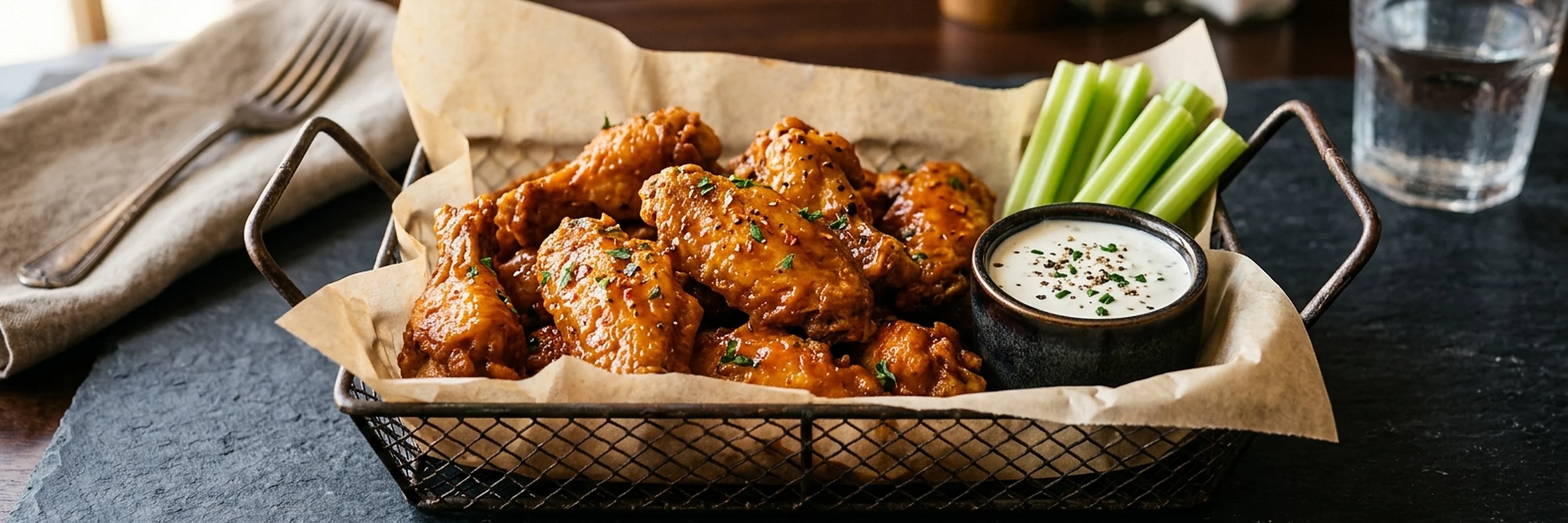
How do you make grilled buffalo wings?Set up a two-zone fire (coals on one side, empty on the other). Dry brine wings with salt overnight in the refrigerator — this removes surface moisture and produces crispier skin without deep frying. Cook wings on the indirect (cool) side first for 20–25 minutes (renders fat, cooks through), then move to the direct high-heat side for 5–8 minutes (crisps skin). Remove from grill, toss immediately in warm buffalo sauce, serve. Key: sauce after grilling, not before — buffalo sauce cannot withstand extended grill heat.
Why Grilled Wings Have a Different Character Than Fried
Grilled buffalo wings aren't just a diet-friendly version of deep-fried wings — they're a different product with their own appeal. The grill adds smoke character that deep frying cannot, the char marks create caramelized bitterness that contrasts with the tangy-buttery sauce, and the dry heat of grilling produces a different skin texture than oil-immersion frying.
The challenge grilling presents: achieving crispy skin without oil immersion. Fat renders out of wing skin, but without a medium (hot oil) to immediately carry that fat away, the skin can become soft or chewy rather than crispy. The dry brine technique and two-zone fire solve this problem.
Grilled Buffalo Wings
Ingredients
- 3 lbs chicken wings, separated at joint into flats and drummettes
- 1.5 teaspoons kosher salt (for dry brine)
- 1 teaspoon baking powder (for dry brine)
- 1/2 teaspoon garlic powder
- 1/2 teaspoon black pepper
- 1/2 cup Frank's RedHot Original
- 4 tablespoons cold unsalted butter
- Optional: 1/4 teaspoon garlic powder for sauce
Method
- Night before: pat wings dry with paper towels. Mix salt and baking powder. Toss wings with salt-baking powder mixture. Spread in single layer on a wire rack over a baking sheet. Refrigerate uncovered overnight (minimum 4 hours).
- Day of: remove wings from refrigerator 30 minutes before grilling. Season with garlic powder and black pepper.
- Set up two-zone fire: charcoal grill — pile coals on one side; gas grill — heat one side to medium-high, leave other side off. Target: 375°F on indirect side.
- Place wings on the indirect (cool) side. Cover grill. Cook 20–25 minutes, turning once at the halfway point.
- While wings cook, make buffalo sauce: warm Frank's over low heat, add cold butter in pieces while whisking. Keep warm.
- After indirect cooking, move wings directly over the hot side. Cook 3–4 minutes per side, watching for flare-ups. Target: skin with defined char marks and crispy texture.
- Transfer wings to a large bowl. Pour warm buffalo sauce over wings. Toss with tongs until every surface is coated.
- Rest 90 seconds in the sauce before serving — this rest allows sauce to set on the wing surface.
Tips
- Baking powder in the dry brine raises the skin's pH, accelerating the Maillard reaction and producing crispier, more golden skin at lower grill temperatures.
- If you get flare-ups on the direct heat side, move wings back to the indirect zone briefly until the flare subsides — flare-ups scorch rather than char.
- Separate fresh buffalo sauce for finishing — never use the sauce you marinated anything in as the final coating.
Two-Zone Fire: Why It's Non-Negotiable
The most important technique for grilled wings: two-zone cooking. Direct high heat alone will char the outside before the inside cooks, producing burned skin and undercooked meat. The two-zone method uses indirect heat to cook through first (like an oven), then direct heat to crisp and char.
Setup for charcoal grill: pile all coals on one half of the grill. Leave the other half completely empty. Place wings on the empty side, cover. Setup for gas grill: heat one or two burners on one side to medium-high (about 375–400°F); leave the remaining burners off. Wings cook on the off side.
The Dry Brine: Why Overnight Makes a Difference
Dry brining (salting in the refrigerator uncovered) serves two functions. First: the salt draws moisture to the surface, which then evaporates in the dry refrigerator air. This removes the surface moisture that causes soft skin. Second: after the initial moisture draw, the salt is absorbed back into the meat, seasoning it from within.
The baking powder addition is a technique from Serious Eats and has become standard in high-quality home wing cooking. Baking powder is alkaline — it raises the skin's pH above neutral, which accelerates the Maillard reaction. Wings dry-brined with baking powder brown faster, develop crispier skin, and have a more golden exterior than those dry-brined with salt alone.
Minimum time: 4 hours. Best results: overnight. The difference between 4-hour and overnight brined wings is noticeable — overnight produces distinctly crispier skin.
Sauce Timing: The Most Common Grilling Mistake
The most common error when grilling buffalo wings: applying sauce while grilling. Buffalo sauce cannot withstand extended grill heat — the butter burns above 250°F, the vinegar evaporates rapidly, and the sauce scorches into a bitter residue. Wings sauced before or during grilling don't taste like buffalo wings; they taste like burned, charred chicken.
Always: grill completely first, remove from grill, rest 60–90 seconds, then toss in sauce in a bowl. The heat of the just-cooked wing warms the sauce on contact — no additional heating needed.
Gas vs. Charcoal for Grilled Wings
Gas vs. Charcoal for Buffalo Wings
| Factor | Gas Grill | Charcoal Grill |
|---|---|---|
| ★ Smoke flavor | Minimal | Significant — adds complexity to buffalo |
| Temperature control | Precise and easy | Requires more attention |
| Heat-up time | 10–15 minutes | 25–35 minutes |
| Flare-up risk | Lower | Higher (dripping fat onto coals) |
| Char marks | Good with proper setup | Excellent — hotter grate zones |
| Overall result | Consistent and reliable | Better flavor, more technique required |
💡 Wood Chips for Smoke on Gas Grills
Gas grills don't naturally produce smoke, but you can add it: soak 1 cup of hickory or apple wood chips in water for 30 minutes, then wrap in aluminum foil with holes poked in the top. Place directly on the gas burner under the grate. The chips will start smoking within 5–10 minutes of lighting the grill. The smoke adds the depth that's missing from gas-grilled wings and pairs exceptionally well with buffalo sauce's cayenne heat. Apple chips produce a sweeter, fruitier smoke; hickory is more assertive and classic BBQ character.