Quick Answer
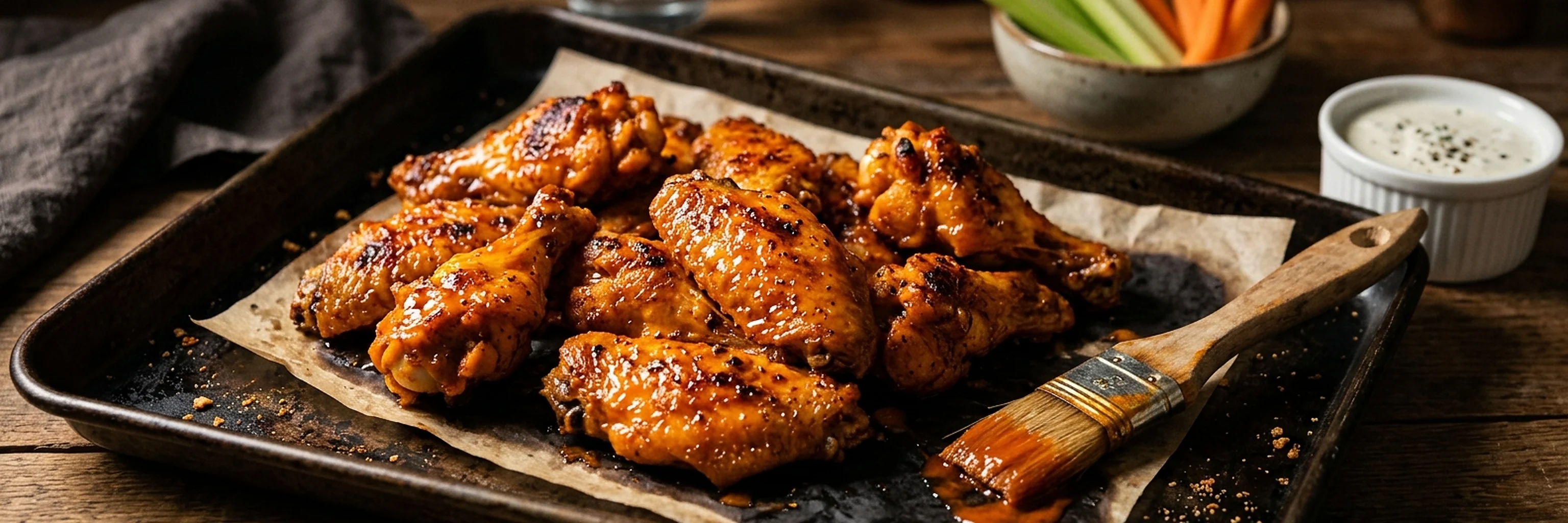
How do you make extra crispy buffalo wings?The crispiest buffalo wings come from deep frying with the double-fry method: fry at 250°F for 8–10 minutes (renders fat, cooks through), rest 10 minutes, then fry at 375°F for 4–6 minutes (maximum crispness). Pat wings completely dry before frying, toss in cornstarch coating (not flour batter — batter makes wings puffy, not crispy), and sauce immediately after the second fry while wings are still crackling hot. The double fry plus cornstarch coating produces crackling, shatteringly crispy skin that holds up to sauce tossing.
What Creates Wing Crispiness
Wing crispiness is a surface texture produced by removing moisture and creating a rigid, dehydrated protein-fat matrix at the skin surface. Four variables control crispiness:
- Surface moisture: Any moisture on the skin surface creates steam during frying, which softens skin from the inside. Pat wings bone-dry before cooking.
- Subcutaneous fat: Chicken wing skin contains fat below the surface. This fat must be fully rendered out during cooking — if it stays liquid, the skin feels flabby. The first fry (lower temperature) accomplishes fat rendering.
- Coating type: Flour batter puffs with steam and produces a thick, soft crust. Cornstarch coating is thin and dehydrates to a shatteringly crispy layer without puffiness.
- Final fry temperature: The second fry at 375°F applies concentrated heat to the dry, fat-rendered surface, creating the final crust rapidly.
Extra Crispy Buffalo Wings (Double-Fry Method)
Ingredients
- 3 lbs chicken wings, separated
- 3 tablespoons cornstarch
- 1 teaspoon salt
- 1/2 teaspoon garlic powder
- 1/2 teaspoon onion powder
- 1/4 teaspoon white pepper
- Neutral oil for frying (vegetable, canola, or peanut) — enough for 3 inches depth
- 1/2 cup Frank's RedHot Original
- 4–5 tablespoons cold unsalted butter
Method
- Pat wings completely dry with paper towels. Dry 2–3 times — take your time. Set on a wire rack and let air-dry 30–60 minutes (or refrigerate uncovered for 1–4 hours).
- Toss dry wings with cornstarch, salt, garlic powder, onion powder, and white pepper. Each wing should have a thin, even coating — shake off excess.
- Heat oil in a large heavy pot to 250°F (121°C). Use a thermometer — temperature control is critical. Fry wings in batches (don't crowd; oil temperature drops with each addition) for 8–10 minutes. Wings should be cooked through but not browned. Remove to a wire rack. Let rest 10 minutes.
- While wings rest, make buffalo sauce: warm Frank's over low heat, whisk in cold butter piece by piece. Keep warm.
- Heat oil to 375°F (191°C). Return wings in batches for the second fry: 4–6 minutes until deep golden brown with shattering crispy exterior.
- Remove wings to a wire rack. Rest 30–60 seconds only — don't wait longer.
- Transfer immediately to a large bowl. Pour sauce over wings. Toss vigorously. Serve within 3 minutes for maximum crispness.
Tips
- Peanut oil has the highest smoke point (450°F) and produces the best flavor for fried wings. Vegetable and canola oils work fine at 375°F.
- The 10-minute rest between fries is when the steam pressure inside the wing equalizes — returning wings to oil without this rest causes skin to puff and become less crispy.
- White pepper (not black) produces less visible speckling on the finished wing and has a slightly sharper heat profile — traditional for Buffalo-style applications.
The Double-Fry Method: Why It Works
The first fry at low temperature (250°F) cooks the wing interior and renders the subcutaneous fat without producing a browned exterior. The low heat allows more time for fat to melt and drip away without the skin surface browning quickly.
The 10-minute rest is critical. During frying, steam builds up inside the wing as internal moisture evaporates. This steam pressure keeps the skin slightly puffed. During the rest, steam dissipates and the skin contracts. When the wing returns to hot oil, the contracted, dry skin has maximum surface area contact with the oil for rapid final crisping.
The second fry at high temperature (375°F) takes the pre-rendered, dry skin and rapidly dehydrates the remaining surface moisture. The cornstarch coating caramelizes and sets into a rigid crust in 4–6 minutes. The result: skin with structural integrity that doesn't go soft when sauce is applied.
Oil Temperature: Why Control Matters
Oil temperature errors produce specific problems:
- First fry too hot (>300°F): Wing browns before interior cooks or fat fully renders. Skin is crispy on the outside but soft underneath.
- First fry too cold (<225°F): Wing absorbs more oil (cold oil doesn't immediately seal the surface) and takes too long — over 12 minutes for fat rendering, greasy result.
- Second fry too cold (<350°F): Extended time needed for browning; wing loses crispness in the oil rather than gaining it.
- Second fry too hot (>400°F): Exterior burns before interior can heat through from the first fry; bitter flavor from burned skin.
An instant-read or clip-on thermometer is essential for consistent results. The difference between 350°F and 375°F produces meaningfully different wing texture.
Cornstarch vs. Flour vs. No Coating
Wing Coating Comparison
| Coating | Texture Result | Thickness | Sauce Adhesion |
|---|---|---|---|
| No coating (naked) | Pure skin crisp — chicken character | Thin — wing skin only | Good if skin is crispy |
| ★ Cornstarch only | Shatteringly crispy — best crunch | Thin — almost invisible | Excellent |
| Flour (thin) | Crispy with slight chew | Medium crust | Good |
| Flour batter (thick) | Crispy-puffy, beer batter style | Thick | Sauce soaks in |
| Potato starch | Very similar to cornstarch | Thin | Excellent |
Saucing Without Losing Crispness
The tension: buffalo sauce contains vinegar and butter — both introduce moisture that can soften crispy skin. Extra-crispy wings that stay crispy after saucing require:
- Thick sauce: More butter in the ratio (5–6 tablespoons per 1/2 cup hot sauce) makes a thicker sauce that coats without penetrating the skin deeply. Thin sauce soaks in; thick sauce stays on the surface.
- Hot wings, hot sauce: Both at serving temperature — the heat keeps butter liquid, allowing it to coat without immediately binding to the skin surface and carrying moisture in.
- Serve immediately: Even the crispiest wings soften within 5–10 minutes of saucing. Serve within 3 minutes of tossing for maximum crunch at the table.
- Sauce on the side option: For parties where wings will sit: serve naked crispy wings with buffalo sauce on the side for dipping rather than tossing, preserving crispness through the serving period.
💡 The Restaurant Trick for Staying Crispy
Restaurants that need wings to stay crispy through a service period use a technique called "staging": wings are fried through the first fry in advance (rendering fat, cooking through), held warm, then given the second fry to order. This means each order of wings gets a fresh, hot second fry immediately before service — maximum crispness without long holds. At home: do the first fry in advance, keep wings warm in a 200°F oven on a wire rack, and do the second fry just before serving. This produces wings as crispy as possible for any service situation.