Quick Answer
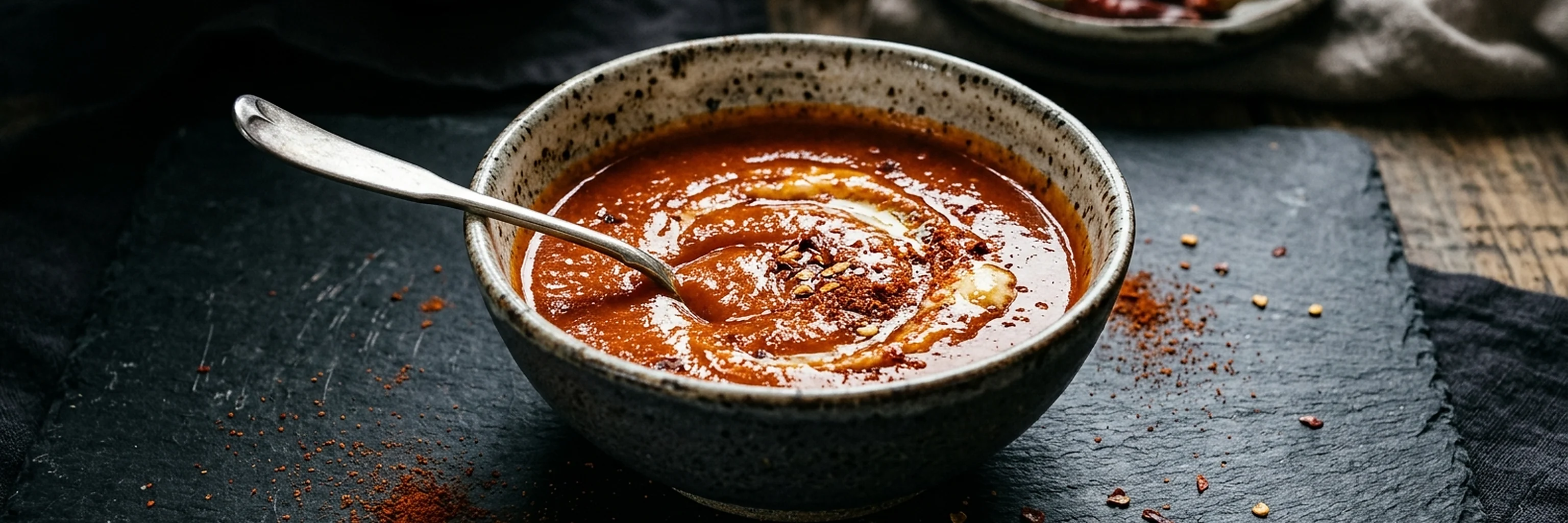
How do you make Korean buffalo sauce?Combine gochujang (fermented Korean chili paste), Frank's RedHot, butter, soy sauce, garlic, sesame oil, and a small amount of rice wine vinegar or honey. The gochujang provides fermented umami depth and a complex, layered heat; the Frank's provides the familiar buffalo tanginess; the soy sauce adds umami salinity; the butter creates the emulsified richness. The result is a sauce that bridges Korean yangnyeom (sweet-spicy glaze) and American buffalo wing traditions — more complex than either alone, with deep fermented flavor from the gochujang and bright acidity from the Frank's.
Two Different Heat Languages
Gochujang and cayenne hot sauce represent fundamentally different approaches to chili heat:
- Gochujang's heat profile: Made from Korean gochugaru peppers fermented with glutinous rice, salt, and soybeans. The fermentation creates amino acids (umami), organic acids (preservation), and complex flavor compounds that take months to develop. The heat from gochujang is warm, persistent, and deeply integrated with umami and slight sweetness. It builds slowly and lingers.
- Cayenne hot sauce (Frank's) heat profile: Fresh cayenne peppers aged in salt and mixed with distilled white vinegar. The heat is brighter, sharper, and more immediate than gochujang. The acetic acid adds a distinct tanginess that gochujang doesn't have. The heat is clean and relatively fast to dissipate.
- Combined effect: Korean buffalo sauce has two-phase heat — the immediate cayenne hit from Frank's followed by the building, persistent gochujang warmth. The umami from the gochujang's fermentation also amplifies the savory character of the sauce beyond what either component provides alone. This is a genuine additive effect, not just mixing two sauces.
This is related to the gochujang buffalo sauce variation, but Korean buffalo sauce is a more developed fusion that adds more Korean ingredients (sesame, soy, rice wine) to create a fuller flavor profile.
The Korean Buffalo Components
Korean Buffalo Sauce Ingredients and Their Roles
| Ingredient | Role | Amount | Can Substitute? |
|---|---|---|---|
| Frank's RedHot | Buffalo tang, cayenne heat, acidity | 3 tablespoons | Crystal, Tabasco at same amount |
| ★ Gochujang | Fermented umami, Korean heat, thickness | 1.5 tablespoons | Gochugaru paste + miso (less ideal) |
| Unsalted butter | Emulsification, richness, fat body | 3 tablespoons | Plant butter for vegan |
| Soy sauce | Salt + umami depth | 1 teaspoon | Tamari (gluten-free) |
| Sesame oil (toasted) | Aromatic nuttiness | 1 teaspoon (off-heat) | None — critical |
| Rice wine vinegar | Brightening acid | 1 teaspoon | White wine vinegar |
| Honey or brown sugar | Sweetness to balance gochujang | 1 teaspoon | Maple syrup |
| Garlic (fresh) | Sharp aromatic base | 1–2 cloves, minced | Garlic powder in half amount |
Ingredients
- 3 tablespoons Frank's RedHot Original
- 1.5 tablespoons gochujang (Korean chili paste)
- 3 tablespoons unsalted butter
- 1 teaspoon low-sodium soy sauce
- 1 teaspoon toasted sesame oil
- 1 teaspoon rice wine vinegar
- 1 teaspoon honey
- 2 cloves garlic, minced or pressed
Method
- In a small saucepan over medium-low heat, melt 1 tablespoon of the butter. Add minced garlic and cook 60 seconds, stirring — don't brown.
- Add Frank's RedHot, gochujang, soy sauce, rice wine vinegar, and honey. Whisk to combine and bring to a gentle simmer, stirring. Simmer 2 minutes to allow gochujang to fully hydrate and the flavors to integrate.
- Reduce heat to low. Add remaining 2 tablespoons of butter in pieces, whisking continuously until emulsified.
- Remove from heat completely. Add sesame oil and stir. The sesame oil goes in off-heat — its volatile aromatics evaporate at cooking temperatures.
- Taste and adjust: more gochujang for deeper fermented heat (it adds quickly); more Frank's for more tang; more honey if too spicy. Let rest 2 minutes before using — flavors continue to integrate.
- Use immediately or refrigerate up to 5 days. The gochujang flavor deepens after 24 hours.
Tips
- Gochujang brands vary significantly in heat level and sweetness. Popular brands in US markets: CJ Haechandle (widely available, reliable heat), Chungjungone (balanced), O'Food (good for beginners — slightly milder). If your gochujang is particularly sweet, reduce or eliminate the honey. If it's particularly hot, reduce by 1/2 tablespoon and replace with additional Frank's RedHot.
- The sesame oil absolutely must go in off-heat. Toasted sesame oil contains highly volatile aromatic compounds (pyrazines, pyrans) that evaporate rapidly at cooking temperatures. Adding it during cooking destroys most of the aromatic value. Add off-heat and stir in the residual warmth — the sesame character will be dramatically more present.
- This sauce is excellent cold (room temperature or refrigerator temperature) as well as warm — the gochujang's umami character is present at all temperatures. Cold Korean buffalo sauce works as a dipping sauce or salad dressing without reheating.
💡 The Twice-Fried Wing Connection
Traditional Korean fried chicken (yangnyeom chicken) uses a twice-frying technique — first fry at lower temperature (325°F) to cook through, rest, second fry at higher temperature (375°F) to crisp. This double-fry produces the exceptionally thin, glassy crust that Korean fried chicken is known for. Korean buffalo sauce pairs especially well with this technique because the thin crust holds the sauce differently than a thick American-style wing crust — the sauce integrates with the thin shell rather than sitting on top of it. See the chicken wing cooking methods guide for the full double-fry technique.
Best Applications
Korean buffalo sauce works across both traditional wing contexts and Korean-inspired formats:
- Wings: The classic application. Korean buffalo wings are excellent — the fermented depth makes the sauce more interesting than standard buffalo without being unfamiliar.
- Rice bowls: The umami-rich sauce works exceptionally well over rice. Buffalo Korean chicken rice bowls with pickled vegetables, cucumber, and a soft-boiled egg — the sesame-soy-gochujang-buffalo combination is deeply satisfying.
- Noodles: Toss cold or warm noodles in Korean buffalo sauce with julienned vegetables. See the buffalo chicken fried rice approach for a rice variation.
- Lettuce wraps: The flavors are familiar in a Korean BBQ context — serve Korean buffalo chicken in butter lettuce cups with sliced scallions and sesame seeds.