Quick Answer
How do buffalo wing styles differ across American regions?American regional wing styles have diverged significantly from the Buffalo, NY original: The South developed sweet-heat variations (honey buffalo, sweet chili) influenced by BBQ culture; Nashville's hot chicken tradition influenced dry-cayenne paste preparations that look different from classic sauced wings; Korean-American communities developed crispy-fry techniques and gochujang-buffalo fusion styles; the West Coast embraced more adventurous fusion variations (yuzu buffalo, mango habanero) and craft beer pairings. The one constant is the base concept — fried or roasted chicken with a spicy coating — but preparation methods, sauce profiles, and accompaniments vary substantially by region.
Buffalo, NY Original: The Canonical Standard
The Buffalo standard against which all regional variations are measured:
- Preparation: Deep-fried (never baked in the original tradition), no breading or batter, just the raw wing section coated in sauce after frying
- Sauce: Frank's RedHot + butter (or equivalent aged cayenne hot sauce), emulsified at approximately 1:1 ratio
- Heat levels: Mild, Medium, Hot, Suicidal — using the same base sauce recipe with different ratios
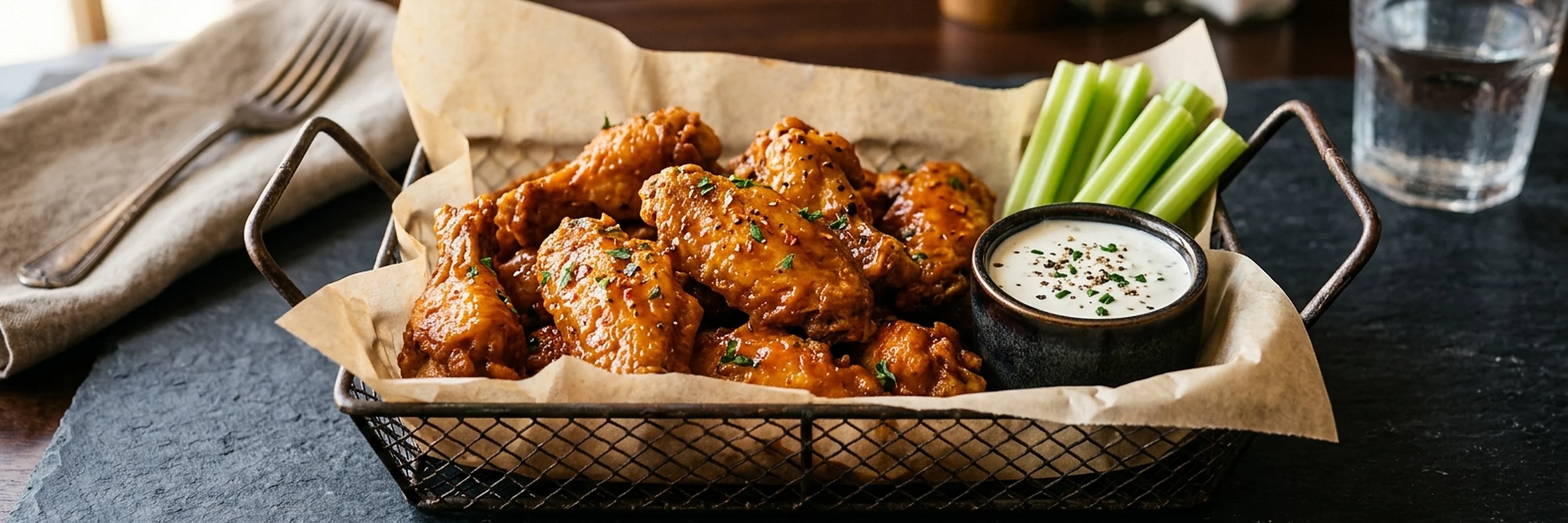
- Accompaniments: Blue cheese dressing (mandatory), celery stalks, nothing else traditionally
- Plating: Piled in a basket or on a plate without individual servings
The Buffalo standard is defined by minimalism — the dish is essentially two ingredients (hot sauce and butter) applied to fried chicken. Regional variations often add complexity, but purists in Buffalo argue the simplicity is what makes the original the best version.
Nashville's Hot Chicken Influence
Nashville hot chicken (traditionally made with a cayenne paste rubbed into and brushed onto fried chicken) has influenced a specific wing style that's distinct from classic sauced buffalo:
- Nashville-style wings use a dry-paste cayenne coating (butter, cayenne, brown sugar, garlic, paprika) applied to the chicken before or after frying — the paste creates a completely different visual and texture from classic wet-sauced buffalo wings
- The resulting wing has a dark, spicy-paprika surface that's slightly caramelized and dry rather than wet and saucy
- Heat in Nashville-style comes primarily from cayenne powder at higher concentrations than typical buffalo sauce, creating a drier, more intense heat
- Nashville-style wings with ranch and bread/coleslaw accompaniments reflect the original Nashville hot chicken serving tradition (white bread absorbs the drippings; coleslaw provides cooling contrast)
- This style has spread nationally through Nashville-style fast casual restaurants (Hattie B's, Howlin' Ray's, Joella's) and their national expansion
Southern Sweet Heat Style
The American South developed its own wing tradition that diverges from Buffalo in multiple ways:
- Honey buffalo and honey garlic: The most common Southern wing style is a honey-cayenne sauce — sweeter than classic buffalo, with the honey providing a sticky, caramelized quality when the sauce reduces. This reflects the South's BBQ tradition of sweet-spicy-smoky flavor profiles.
- Smoked wings: Southern BBQ culture has produced smoked wings as a significant regional style — wings smoked over fruitwood or hickory, then finished with a sweet-heat glaze. This is genuinely different from fried-and-sauced traditional wings.
- Ranch as default dip: The South's ranch preference (vs. Buffalo's blue cheese mandate) reflects the regional condiment preferences that preceded wing culture and remained as wings spread south.
- Larger sizes and bone-in emphasis: Southern BBQ-adjacent wing culture tends toward larger, meatier wings as a main course rather than bar snack portions.
Korean-Influenced Wing Styles
The Korean fried chicken tradition (dakgangjeong — sweet-crispy fried chicken) has significantly influenced American wing culture, producing a genuine fusion category:
- Double-fry technique: Korean fried chicken uses a double-fry method (fry at lower temp, rest, fry at higher temp) that produces extraordinary crispiness that persists better under sauce than traditional single-fry. This technique has been adopted by American wing restaurants specifically because it produces wings that stay crispier after saucing.
- Gochujang buffalo fusion: Gochujang (fermented red pepper paste) mixed with butter and vinegar in a buffalo-style preparation has become a specific wing category at Korean-American restaurants. The resulting sauce has the tanginess of classic buffalo, the heat of cayenne, and the fermented complexity of gochujang — genuinely excellent.
- Soy-garlic wings: A non-spicy alternative to buffalo that has become extremely popular — soy sauce, garlic, honey, sesame. This is a Korean-American flavor profile that fills the "wing night" format for people who don't want heat.
- Korean wing chains: Bonchon, bb.q Chicken, Pelicana — Korean fried chicken chains have expanded nationally and introduced many Americans to the double-fry technique and Korean-adjacent wing flavors as an alternative to the Buffalo-style standard.
| Regional Style | Cooking Method | Sauce/Coating | Heat Profile | Accompaniments |
|---|---|---|---|---|
| Buffalo, NY original | Single deep-fry | Frank's + butter (wet sauce) | Cayenne build | Blue cheese, celery |
| Nashville-style | Deep-fry + paste | Dry cayenne paste | Intense, dry heat | Ranch, bread, slaw |
| Southern sweet heat | Fry or smoke | Honey-cayenne or smoke glaze | Sweet-forward, building | Ranch, carrots |
| Korean-American | Double deep-fry | Gochujang or soy-garlic | Complex, not just hot | Pickled radish, scallion |
| West Coast fusion | Fry or air fry | Various (yuzu, mango, etc.) | Variable, creative | Varies, often avocado |
West Coast Fusion Variations
The West Coast's food innovation culture has produced the most experimental wing variations:
- Yuzu buffalo: Japanese citrus (yuzu) replacing or supplementing vinegar in buffalo sauce, creating a more aromatic, floral-citrus version. Popular at Japanese-American and Pan-Asian restaurants in California.
- Mango habanero: Tropical fruit + habanero heat in a wing sauce that's simultaneously fruity and very spicy. The mango sweetness moderates habanero's intensity while its fruitiness complements the pepper's flavor profile.
- Kimchi buffalo: Kimchi brine replaces vinegar in buffalo sauce, adding fermented Korean flavor complexity to the classic emulsion. Produces a funky, fermented, tangy-spicy wing that has won significant food media attention in LA and SF markets.
- Craft beer-focused wing rooms: West Coast craft beer culture has produced establishments that specifically curate their wing sauce lineup to pair with their beer program — each sauce designed with a specific beer style pairing in mind.
💡 The Regional Style Hierarchy
There's no objectively correct wing style — the regional variations represent genuine and valid culinary adaptations to local preferences, ingredients, and cultural influences. The Buffalo original deserves respect as the source, but Korean double-fry techniques produce objectively crispier wings; Southern smoked wings offer a depth of flavor that fried wings can't match; West Coast fusion creates flavor combinations that genuinely expand the concept. The best approach: be familiar with the original, be curious about the variations, and be honest about which experience you're seeking for any given occasion.