Quick Answer
What honey should I use in honey buffalo sauce?For honey buffalo sauce, wildflower honey or clover honey (both neutral, widely available) let the cayenne and butter character lead while adding balanced sweetness. For a more complex sauce: buckwheat honey (dark, molasses-like) or orange blossom honey (floral) add distinctive character that elevates honey buffalo beyond simple sweet-heat. Local raw honey is worth using if you have access — the terroir variation (local flowers, pollen) creates more complex honey buffalo than processed commercial honey. The ratio matters as much as the type: at 2–3 tablespoons honey per 1/2 cup hot sauce, you get honey buffalo; at 1/2 cup honey, you get hot honey — a different product.
Why Honey Works in Buffalo Sauce
Honey serves two distinct functions in honey buffalo sauce:
- Sweetness balance: Buffalo sauce is sharp, acidic, and savory. A small amount of honey rounds out the acidity without making the sauce sweet — it acts as a balance point. Many guests who find standard buffalo sauce too sharp enjoy honey buffalo at a moderate ratio.
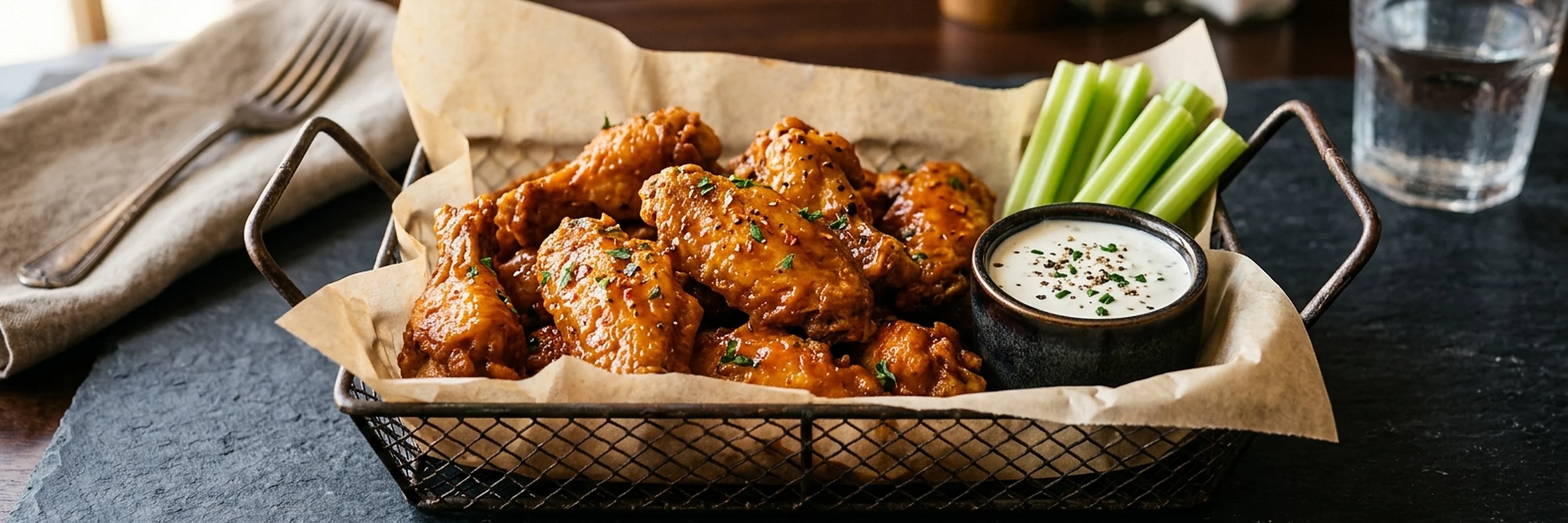
- Viscosity and glaze: Honey's sugars increase the sauce's body, making it thicker and creating better adhesion to wings. Honey buffalo sauce creates a glossier, lacquer-like coating that has more visual appeal and a slightly different mouthfeel than standard sauce.
The key to good honey buffalo sauce: the honey should enhance the buffalo character, not overwhelm it. Too much honey produces a sweet chicken sauce that barely tastes like buffalo. The goal is a sauce where you can clearly taste the hot sauce's vinegar and heat, but they're balanced and sweetened rather than sharp.
| Honey Type | Flavor | Price | Best For | Notes |
|---|---|---|---|---|
| Clover honey | Mild, sweet, clean | $3–6/lb | Neutral base, lets buffalo lead | Most widely available |
| Wildflower honey | Slightly complex, variable | $5–10/lb | More nuanced honey buffalo | Flavor varies by source |
| Buckwheat honey | Dark, molasses-like, robust | $8–15/lb | Bold, adult-oriented honey buffalo | Strong — use less |
| Orange blossom honey | Floral, citrus notes | $6–12/lb | Light, floral honey buffalo | Pairs well with citrus zest |
| Manuka honey | Medicinal, distinctive | $30–80/lb | Not ideal — flavor too distinctive | Too expensive and distinct |
| Raw local honey | Variable, complex | $8–20/lb | Best overall for nuanced sauce | Support local beekeepers |
Honey-to-Sauce Ratios
The honey ratio determines whether you're making honey buffalo sauce or hot honey — distinct products:
- 1–2 tablespoons honey per 1/2 cup hot sauce: Subtle sweetness, barely noticeable but rounds the edges. "Slightly less sharp buffalo sauce." For guests who find standard buffalo marginally too acidic.
- 2–3 tablespoons honey per 1/2 cup hot sauce: Clear honey buffalo character — sweet, spicy, balanced. The standard "honey buffalo" wing sauce range. Most restaurant honey buffalo sauces are in this range.
- 4–6 tablespoons honey per 1/2 cup hot sauce: Sweet-forward with heat — the sauce reads as sweet first, hot second. Some guests strongly prefer this; traditional buffalo fans often find it too sweet.
- Equal parts honey and hot sauce: Hot honey territory — a glaze more than a wing sauce. Excellent for grilled applications; too thick for traditional wing tossing.
💡 Warming Honey for Better Integration
Honey doesn't emulsify as cleanly as butter into cold or room-temperature sauce — it can create a sticky layer rather than fully integrating. For the best honey buffalo sauce texture: warm the hot sauce gently (150°F), add the honey and whisk thoroughly until fully incorporated, then add the cold butter gradually. The warm sauce helps the honey fully dissolve before the butter is added. Alternatively: warm the honey slightly (15 seconds in the microwave) before adding to room-temperature sauce and whisking vigorously.