Quick Answer
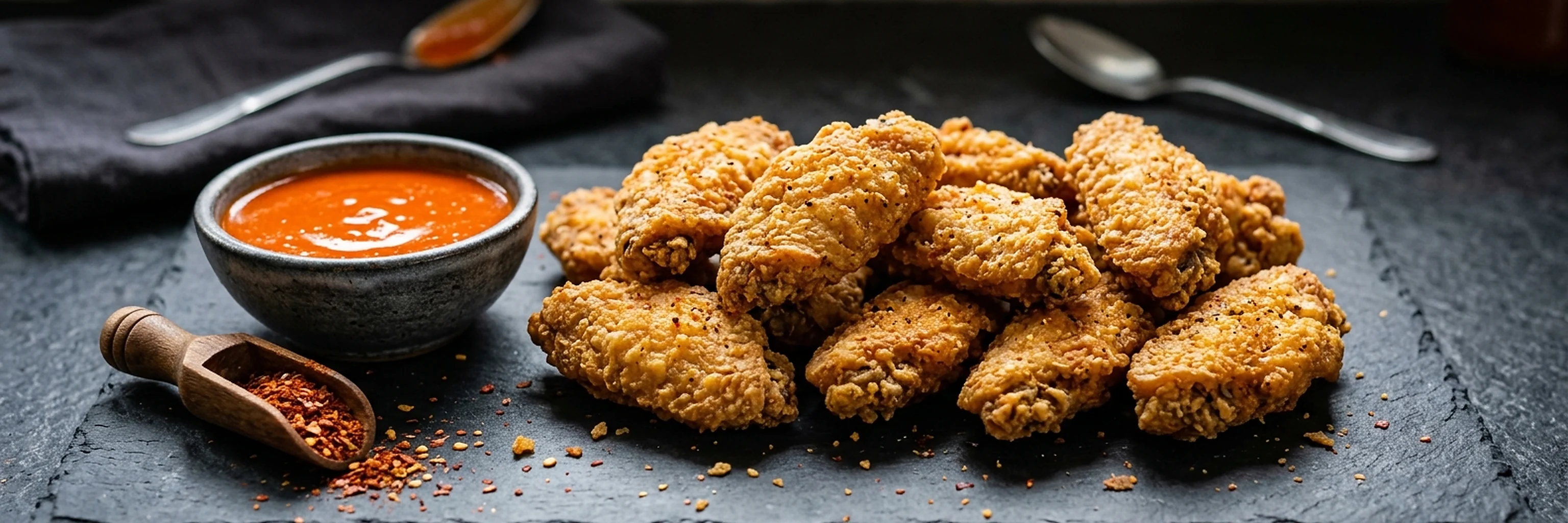
What are buffalo wing flats and how do you cook them?Wing flats are the middle section of a chicken wing — the flat, paddle-shaped piece between the drumette and the wing tip, with two parallel bones running through it. They have more skin surface area relative to meat than drumettes, which means more crispy surface area and more buffalo sauce per bite. Cook exactly like drumettes: pat dry, bake at 425°F on a wire rack for 38–42 minutes, toss in buffalo sauce immediately. Flats cook slightly faster than drumettes due to their thinner profile.
The Anatomy of a Wing Flat
A whole chicken wing has three sections:
- Drumette: The upper section, shaped like a small drumstick with one bone.
- Flat (also called "wingette"): The middle section, flat and paddle-shaped with two parallel bones (the radius and ulna). This is what this guide covers.
- Wing tip: The small, largely boneless tip — often discarded or saved for stock.
When you buy "party wings" at the grocery store, you're getting pre-separated drumettes and flats (with wing tips removed). When you buy "whole wings" and split them yourself, you separate all three sections with kitchen shears — cut at the joint between drumette and flat, and again at the joint between flat and tip.
Why Many Wing Enthusiasts Prefer Flats
The drumette vs. flat debate is a genuine point of contention among wing enthusiasts:
- Higher skin-to-meat ratio: The flat's paddle shape means proportionally more skin surface relative to the meat beneath. More skin = more crispiness, more texture, more buffalo sauce contact per bite.
- More sauce coverage: The flat's two-sided shape means you can coat both flat faces with sauce in a way you can't replicate on the round drumette. Each flat has four distinct surfaces (two broad faces + two thinner edges) that all take sauce.
- Thinner profile → more even cooking: The flat's thinner cross-section cooks more evenly than the drumette's thicker, rounder shape. Less chance of the meat overcooking before the skin crisps.
- The technique: Experienced flat eaters use a technique to eat flats cleanly: squeeze the two bones together, twist slightly, and the meat comes off as a single piece. This takes practice but produces a more efficient eating experience than drumettes.
Crispy Baked Buffalo Wing Flats
Ingredients
- 24 chicken wing flats
- 1 tablespoon baking powder
- 1 teaspoon kosher salt
- 1 teaspoon garlic powder
- 1/2 teaspoon black pepper
- For buffalo sauce: 1/2 cup Frank's RedHot + 6 tablespoons cold unsalted butter
Method
- Pat flats completely dry with multiple rounds of paper towels. They must be as dry as possible — moisture is the enemy of crispy skin.
- Combine baking powder, salt, garlic powder, and pepper. Toss flats in this mixture until thoroughly coated.
- Place flats on a wire rack set over a foil-lined baking sheet. Stand them up on their edge if possible (balanced against each other) — this exposes the maximum surface area to dry oven heat.
- Refrigerate uncovered for at least 1 hour, or up to overnight. The longer the dry time, the crispier the result.
- Preheat oven to 425°F.
- Bake for 18 minutes. Flip each flat. Bake another 18–22 minutes until skin is deeply golden and visibly crispy.
- Make buffalo sauce: warm Frank's gently, remove from heat, gradually whisk in cold butter until emulsified.
- Toss flats in sauce immediately after pulling from oven. Serve right away.
Tips
- Flats cook slightly faster than drumettes because they're thinner — check a few minutes early to avoid overcooking.
- Standing flats on edge (rather than laying flat) during baking maximizes airflow around all surfaces. If they won't stay upright, laying flat is fine — just flip more often (flip at 15 and 30 minutes).
- Because flats have more skin surface, they absorb more sauce than drumettes of equivalent weight. Make slightly more sauce if cooking flats only.
The Double-Bone Eating Technique
The technique to eat a wing flat cleanly (and efficiently):
- Hold the flat with one bone pointing toward you and one away from you.
- Bite off any protruding cartilage at the wider end.
- Grip both bones between your fingers. Squeeze gently while twisting slightly — this loosens the meat from the bones.
- Pull one bone out while holding the meat with your teeth or fingers. The meat slides off as one piece.
- Remove the second bone.
- You're left with a single, boneless, intact piece of crispy buffalo chicken.
This technique is the reason flat devotees argue flats are the superior wing — the single-piece meat extraction produces what feels like a more refined eating experience than tearing meat off a drumette bone.
💡 Buying Flats Only
Some grocery stores sell "wing flats only" packages for people who specifically prefer flats over drumettes. If yours doesn't: buy whole wings and split them yourself, keeping only the flats (freeze the drumettes for another batch or cook both). Alternatively, at higher-end grocery stores and butcher shops, you can often request flat-only cuts. The upside of splitting whole wings yourself: significantly lower per-pound cost compared to pre-split party wings, as noted in the budget buffalo recipes guide.