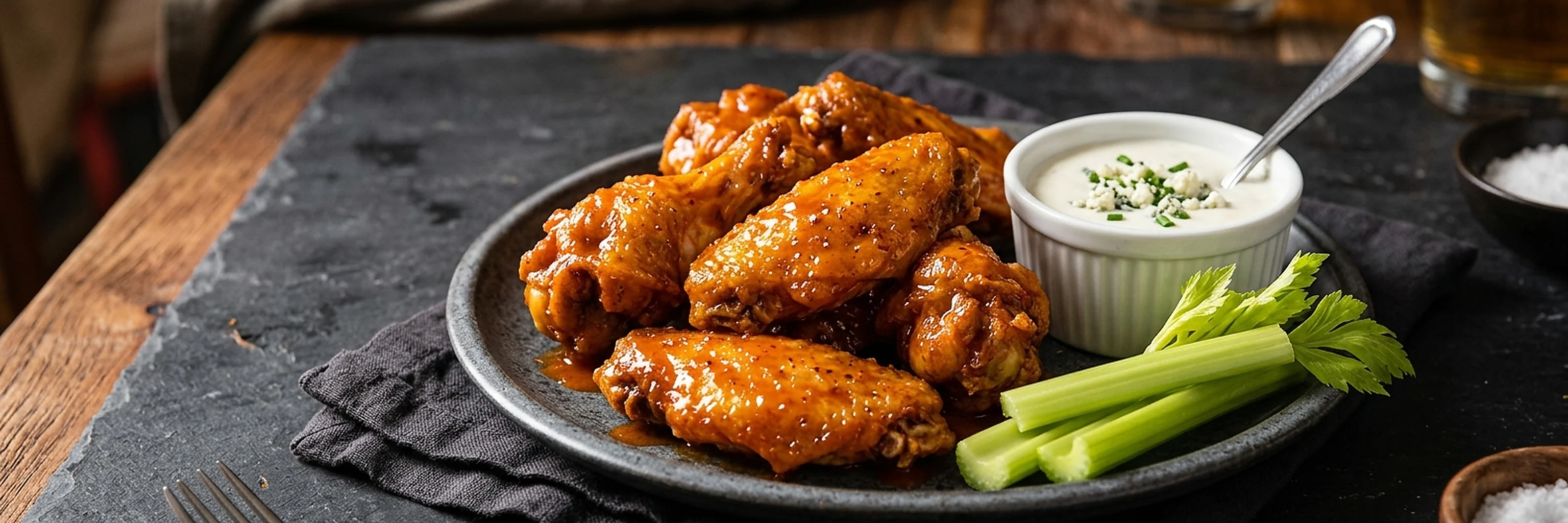
Quick Answer
How do you make buffalo steak bites?Cut sirloin, ribeye, or strip steak into 1-inch cubes. Season aggressively with salt and pepper. Sear in a very hot, lightly-oiled cast iron pan for 1–2 minutes per side — do not crowd the pan. Remove from heat and immediately toss in warm buffalo sauce. The key difference from chicken: steak bites need to be seared in a hot, dry pan to develop the crust, then sauced off-heat. Saucing in the pan over heat causes the butter in the buffalo sauce to brown and burn. The residual heat from just-seared steak is sufficient to warm the sauce and create good adhesion without burning.
Why Buffalo Sauce Works on Beef
Buffalo sauce was developed for chicken, but its flavor components are broadly compatible with beef. The vinegar acidity in Frank's RedHot actually has a tenderizing effect on red meat proteins — the same principle that makes red wine and tomato-based marinades soften beef over time. The tangy heat that defines buffalo sauce provides contrast to beef's rich, savory, slightly fatty character.
The interaction between beef fat and buffalo sauce creates something chicken doesn't provide. When rendered beef fat mixes with buffalo sauce's butter emulsion, the result is a richer, more savory coating. Some of the buffalo sauce's water component also deglazes the pan's fond (the browned bits from searing) — a happy accident that adds depth to the sauce that adheres to the steak bites.
Buffalo steak bites work especially well as appetizers (skewered, toothpick-ready) or as a protein in grain bowls, where the beef character makes the dish more substantial than the same preparation with chicken. The bourbon buffalo sauce also pairs especially well with beef — the bourbon's caramel notes complement beef's Maillard-browned character.
The Right Steak Cut
Steak bites need a cut that sears quickly (small cubes cook fast), has good beef flavor, and stays tender at a medium-rare to medium doneness:
- Sirloin (top sirloin): Best overall choice. Enough marbling for juiciness, firm texture that holds cube shape during searing, excellent beef flavor. More affordable than premium cuts and performs consistently at high heat.
- Ribeye: Most flavorful and most marbled — the fat renders beautifully during searing and the flavor is exceptional. More expensive and slightly harder to cut into uniform cubes due to the fat cap and eye configuration. Worth it for a special occasion application.
- Strip (New York strip): Lean and firm with good beefy flavor. Less marbling than ribeye but more than sirloin. The firm texture makes it easy to cut into uniform cubes. Holds up well to high-heat searing.
- Tenderloin (filet): Very tender but mild in flavor — buffalo sauce's assertive character somewhat overwhelms tenderloin's delicate beefiness. Expensive for steak bites. Sirloin at a fraction of the price produces better results here.
- Chuck or stew meat: Not recommended for seared steak bites — these cuts require long cooking to become tender. Quick searing leaves them tough. Use only if braising (a different preparation).
Ingredients
- 1.5 lbs top sirloin steak, cut into 1-inch cubes
- 1 tablespoon high smoke-point oil (avocado oil or vegetable oil)
- 1 teaspoon kosher salt
- 1/2 teaspoon black pepper
- 1/2 teaspoon garlic powder
- Buffalo sauce (warm):
- 1/4 cup Frank's RedHot Original
- 2 tablespoons unsalted butter
- Optional garnish:
- Blue cheese crumbles
- Sliced green onions
- Celery sticks for serving
Method
- Pat steak cubes completely dry with paper towels. Moisture on the surface prevents searing — it steams instead of browns. This is the most important prep step.
- Season steak cubes generously with salt, pepper, and garlic powder. Toss to coat all surfaces.
- Make the buffalo sauce: melt butter in a small saucepan over low heat, add Frank's RedHot, whisk to emulsify. Remove from heat. Keep warm.
- Heat a cast iron skillet over high heat for 2 minutes until smoking hot. Add oil and immediately add steak cubes in a single layer. Do not crowd — cook in batches if necessary. Crowding causes steaming rather than searing.
- Sear without moving for 1.5–2 minutes until a deep brown crust forms. Flip and sear 1–1.5 minutes on the other side. Internal temperature target: 130°F for medium-rare, 140°F for medium.
- Remove from pan. Do not add sauce to the pan — the high heat will burn the butter. Instead, transfer steak bites directly into a large bowl.
- Pour warm buffalo sauce over steak bites. Toss gently to coat. The residual heat from the steak and the warm sauce are sufficient.
- Transfer to a serving platter. Top with blue cheese crumbles and green onions. Serve immediately with celery sticks.
Tips
- The single most important technique: dry the steak completely before searing. Wet steak in a hot pan creates steam, which prevents the Maillard browning that creates crust. Pat dry, season, then sear. A well-seared steak bite has a mahogany-brown crust — this Maillard reaction produces hundreds of flavor compounds that raw or steamed beef lacks.
- Cook to medium-rare (130°F). Buffalo steak bites at medium-rare are juicy and tender. Well-done steak bites are tough and chewy — the muscle proteins have contracted fully and expelled most moisture. If you prefer well-done, cut cubes smaller (3/4 inch) so they cook faster while retaining more moisture relative to their mass.
- Let the steak rest 2 minutes before tossing in sauce if you want less pink in the interior. The brief rest allows proteins to relax and juices to redistribute. Tossing immediately means some carryover cooking juice mixes into the sauce — not a problem, but worth knowing.
💡 Skewered for Party Service
Buffalo steak bites work exceptionally well as party appetizers on skewers. Thread 3–4 steak bites on each small wooden skewer after tossing in sauce. Arrange on a platter with blue cheese dressing for dipping on the side. For outdoor parties, the skewers can be lightly grilled after the oven step — 1–2 minutes over high heat for slight char marks and a smoky note that complements the buffalo sauce. Soak wooden skewers in water for 30 minutes before grilling to prevent burning. Metal skewers eliminate this step.
Serving Options
Buffalo steak bites are more versatile than they appear:
- Grain bowl protein: Add buffalo steak bites to a rice or farro bowl with roasted vegetables, avocado, and drizzle of additional buffalo sauce. The beef makes this significantly more filling than the chicken version.
- Salad topping: Serve warm steak bites over a wedge salad (iceberg, blue cheese, bacon) — the classic steakhouse wedge elevated with buffalo heat.
- Loaded potato: Serve over a baked potato with sour cream, cheddar, and green onions. The steak-and-potato combination is classic; the buffalo twist makes it distinctive.
- Flatbread topping: Thin-sliced buffalo steak bites on flatbread with blue cheese sauce, arugula, and thinly sliced red onion.