Quick Answer
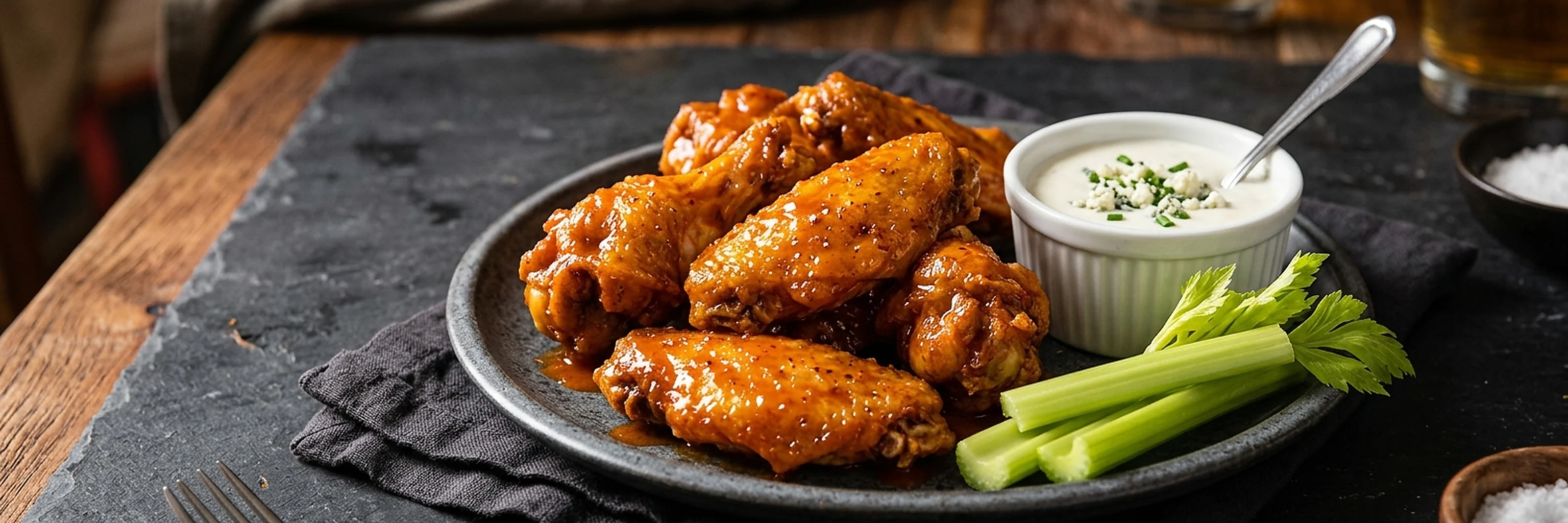
What wine pairs well with buffalo wings?Wine pairing with buffalo wings is genuinely difficult — the high acid, capsaicin heat, and butter fat of buffalo sauce challenge most wines. The wines that work best: sparkling wine (Cava, Prosecco — carbonation and acidity); off-dry Riesling (slight sweetness modulates heat, acidity complements the sauce); Gewürztraminer (aromatic, slightly spicy, low tannin); and light Pinot Gris. Avoid tannic reds (tannins amplify capsaicin heat) and heavily oaked whites (oak clashes with the vinegar). Be honest with yourself: beer is a better pairing than most wines with buffalo wings.
Why Wine Is Difficult with Buffalo Wings
Buffalo sauce creates a challenging environment for wine pairing due to three simultaneous factors:
- High capsaicin heat: Heat and tannins in wine interact badly — tannins amplify the burning sensation from capsaicin. This eliminates most red wines immediately.
- High acidity: Buffalo sauce's vinegar base means the dish is already highly acidic. High-acid wines (Sauvignon Blanc, Champagne, Riesling) compete with the sauce; low-acid wines can taste flat and flabby against the sauce's acidity.
- Rich butter content: The emulsified butter in buffalo sauce creates a fat richness that needs something refreshing to contrast it. Heavily oaked, buttery Chardonnay matches fat with fat — the result is heavy and monotonous.
The wine styles that avoid all three problems are limited — but they do exist.
| Wine Style | Works? | Why | Best With |
|---|---|---|---|
| Sparkling (Cava, Prosecco) | Yes — excellent | Carbonation + acidity, no tannins | All heat levels |
| Off-dry Riesling | Yes — very good | Sweetness moderates heat, refreshing acidity | Medium to hot buffalo |
| Gewürztraminer | Yes — good | Aromatic, slightly spicy, no tannins | Standard buffalo |
| Pinot Gris (Alsatian) | Yes — decent | Moderate acidity, lower oak, some body | Standard buffalo |
| Champagne / Crémant | Yes — excellent | Premium carbonation + fine acidity | All heat levels |
| Heavy Chardonnay (oaked) | No — clashes | Buttery oak fights vinegar and fat | Avoid |
| Cabernet Sauvignon | No — bad | High tannins amplify capsaicin heat dramatically | Avoid |
| Sauvignon Blanc (high acid) | Marginal | Too acidic vs. already-acidic sauce | Only at mild heat |
Wines That Work and Why
Sparkling wines (Cava, Prosecco, Champagne, Crémant): The best overall wine category for buffalo wings. Carbonation provides palate cleansing (the same benefit as beer); the acidity refreshes between bites; the lack of tannins means no heat amplification. Prosecco's slight sweetness is a bonus. Cava's drier, brioche character works with the buttery sauce.
Off-dry Riesling: The slight sweetness (10–30 g/L residual sugar) modulates capsaicin heat perception — one of the only white wine styles that actively helps manage heat. German Spätlese or Auslese Riesling works well. The high natural acidity of Riesling is balanced by the sweetness rather than tasting sharp against the already-acidic sauce.
Gewürztraminer: The spicy, aromatic character (lychee, rose, and a natural spicy note from the grape variety) harmonizes with buffalo sauce's heat profile. Low tannins avoid heat amplification. Alsatian Gewürztraminer at around 13–14% alcohol is a solid choice.
💡 The Honest Assessment
If your wing night guests primarily drink wine, Cava or Prosecco is the right answer — it's the most food-friendly sparkling wine and works universally. If you want to serve something more distinctive: off-dry Riesling or Gewürztraminer. If guests are bringing their own wine or ordering it at a restaurant with wings: steer toward these styles and away from red wines. The honest take: wing night is beer territory, and wine works best when it behaves like beer (sparkling, refreshing, not tannic).