Quick Answer
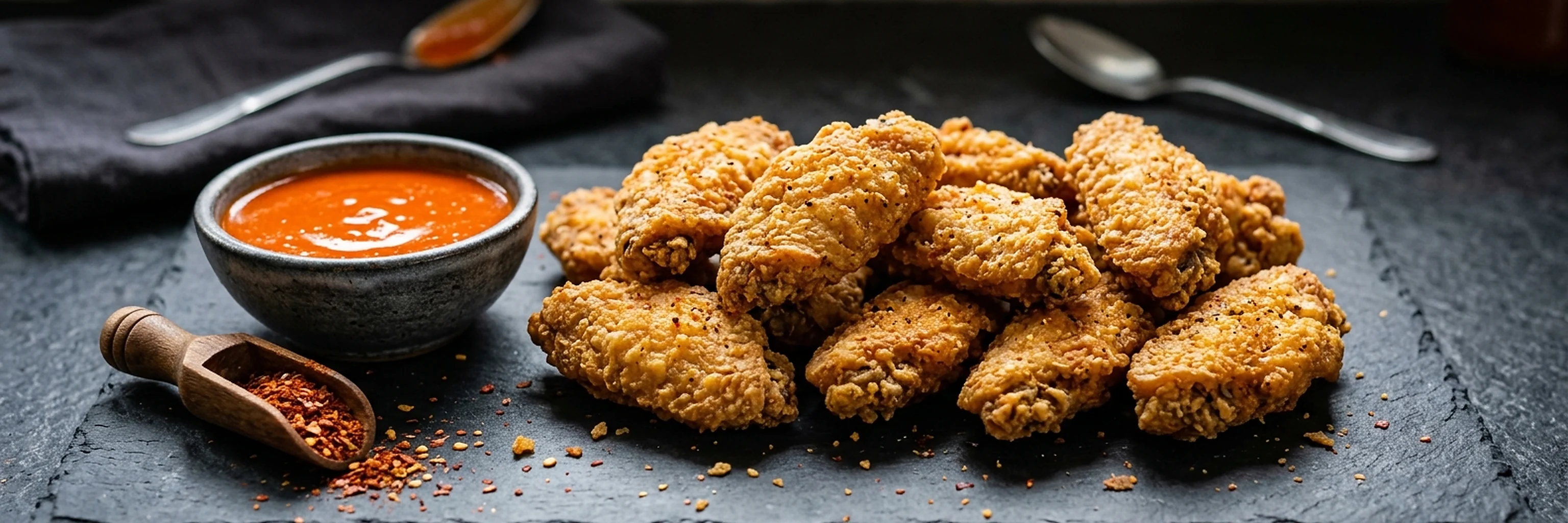
What is the Maillard reaction and how does it affect chicken wings?The Maillard reaction is the chemical reaction between amino acids (proteins) and reducing sugars when exposed to heat — it's responsible for the brown color and savory, complex flavors in browned food. For chicken wings: it's the reason properly fried or roasted wings have that golden-brown, crispy skin with deep savory flavor rather than pale, flabby skin. The reaction requires temperatures above 280°F (138°C) at the food surface and proceeds faster at higher temperatures. Properly fried wings reach these surface temperatures; properly oven-roasted wings can too with the right technique. Soggy wings or wings cooked too gently never reach Maillard temperatures at the skin surface.
What the Maillard Reaction Is
The Maillard reaction was first described by French chemist Louis-Camille Maillard in 1912. It's a complex set of chemical reactions — technically hundreds of simultaneous reactions — that occur when amino acids (the building blocks of proteins) react with reducing sugars in the presence of heat. The results are:
- Brown color: The characteristic golden-to-dark-brown color of browned meat, bread crust, roasted coffee, and toasted bread all come from Maillard products — particularly a class of compounds called melanoidins
- Complex flavors: Hundreds of new flavor compounds are created that don't exist in raw ingredients — including pyrazines (nutty, roasted), furans (caramel, sweet), aldehydes (fruity, green), and many others
- Aroma: Many of the volatile compounds produced in the Maillard reaction are highly aromatic — the smell of a searing steak, fresh bread, or a perfectly fried wing is primarily Maillard chemistry
- Texture changes: Maillard products at the food surface contribute to crispiness — the crosslinked protein and sugar compounds form rigid structures
The Maillard reaction is distinct from caramelization (pure sugar breakdown) and from simple protein denaturation (which happens at lower temperatures). All three occur in cooked food, but the Maillard reaction is responsible for most of the flavor complexity and browning in savory cooking.
Why the Maillard Reaction Matters Specifically for Wings
Chicken skin is an ideal substrate for Maillard browning, for several reasons:
- High protein content: Chicken skin contains substantial collagen (which hydrolyzes to gelatin) and other structural proteins — plenty of amino acid reactants for the Maillard reaction
- Natural sugars present: Chicken skin contains glycogen and other reducing sugars, particularly when fresh (as opposed to frozen-then-thawed, which has some glycogen breakdown). These are the sugar reactants the Maillard reaction needs.
- High fat content aids heat transfer: The fat in chicken skin conducts heat effectively, helping the skin surface reach Maillard temperatures faster and maintaining them during cooking
- Thin layer structure: Chicken skin is thin enough that the surface can reach very high temperatures even when the underlying meat is only reaching safe internal temperature (165°F/74°C)
The end result, when done correctly: golden, shatteringly crisp wing skin with complex savory-roasted flavor that the raw ingredient lacks entirely. This is what "properly cooked wings" means at the chemical level.
Temperature Requirements for Wing Browning
The Maillard reaction begins slowly at around 250–280°F (120–138°C) at the food surface and accelerates significantly as temperature rises. For chicken wings specifically:
- Below 280°F surface temp: Little to no Maillard reaction — the skin will dry out but not brown meaningfully
- 280–320°F: Slow browning — extended cooking time produces some browning but the skin may overcook before adequate Maillard product development
- 320–375°F: Good browning zone — most oven-roasting methods target this range
- 375–450°F+: Rapid Maillard browning — frying in 350–375°F oil puts the oil at this temperature; the skin surface is technically below the oil temperature but reaches 300–350°F quickly
Critical distinction: these are surface temperatures, not oven temperatures. An oven set to 400°F will produce surface temperatures on the wing skin well below 400°F due to the insulating effect of moisture evaporating from the surface. This is why techniques that remove surface moisture (drying the wings, baking powder coating) dramatically improve browning — they remove the evaporative cooling that keeps the surface temperature low.
| Cooking Method | Surface Temp Achieved | Maillard Browning | Time to Brown |
|---|---|---|---|
| Deep frying (350–375°F oil) | 300–350°F at skin | Excellent — rapid | 6–10 min |
| Air frying (400°F) | 280–320°F at skin | Very good | 20–25 min |
| Oven roasting (450°F, dried wings) | 300–330°F at skin | Good | 45–55 min |
| Oven roasting (425°F, wet wings) | 220–260°F at skin | Poor — steaming effect | 45+ min, pale |
| Grilling (direct heat) | 350°F+ at skin | Good — grill marks | 15–20 min |
| Slow cooking (crock pot) | Below 250°F | None — no Maillard | No browning occurs |
Maximizing Maillard Browning on Wings
Several techniques specifically improve Maillard browning on chicken wings:
- Dry the wings thoroughly before cooking: Moisture on the skin surface is the enemy of browning — it keeps the surface at 212°F (boiling point of water) until all moisture evaporates, delaying Maillard chemistry. Pat completely dry with paper towels, and ideally air-dry in the refrigerator uncovered for 8–24 hours before cooking.
- Baking powder coating (for oven/air fryer): Mixing baking powder (NOT baking soda) into a dry rub or applying it to the skin has two browning effects. First, it raises the skin pH, and Maillard reactions proceed faster in slightly alkaline environments. Second, it creates tiny bubbles during cooking that increase surface area and promote crispiness. The pH effect is particularly significant — it's the same principle behind the pretzel lye wash that creates extreme browning on soft pretzels.
- High heat + steam venting: Oven-roast on a wire rack (not a flat pan) to allow air circulation on all surfaces and prevent steam buildup under the wings.
- Double frying: Frying at 325°F first (cooks the interior), then at 400°F briefly (drives extreme Maillard browning and crisping on the already-dry skin). This is the technique behind Korean fried chicken's extraordinary crispness.
- Salt brine/dry brine: Salt draws surface moisture out of the skin, then the moisture reabsorbs slightly salted — the net effect is drier skin surfaces and slightly modified protein chemistry that browns more readily.
💡 The Baking Powder Secret
The single biggest improvement for oven-baked or air-fried wings: toss them in 1 teaspoon baking powder per pound of wings (with salt and any spices) before cooking. The pH increase from baking powder accelerates Maillard browning by 15–20%, producing significantly deeper golden color in the same cooking time. Use aluminum-free baking powder to avoid any metallic flavor. This technique is why restaurant oven wings often look better-browned than home versions — many use this treatment.