Quick Answer
Is buffalo sauce safe to eat during pregnancy?Buffalo sauce is generally safe to eat during pregnancy when consumed in reasonable quantities. The core ingredients — cayenne pepper, white vinegar, butter, salt, and garlic powder — are all pregnancy-safe foods. Capsaicin (the spicy compound) does not cause harm to a developing fetus. The practical concerns are: high sodium content (190–240mg per tablespoon depending on brand), potential for heartburn and acid reflux (very common during pregnancy), and the dairy in butter (a concern only for those with dairy allergies, not a general pregnancy safety issue). As always, discuss specific dietary concerns with your OB or midwife.
Are the Ingredients in Buffalo Sauce Safe During Pregnancy?
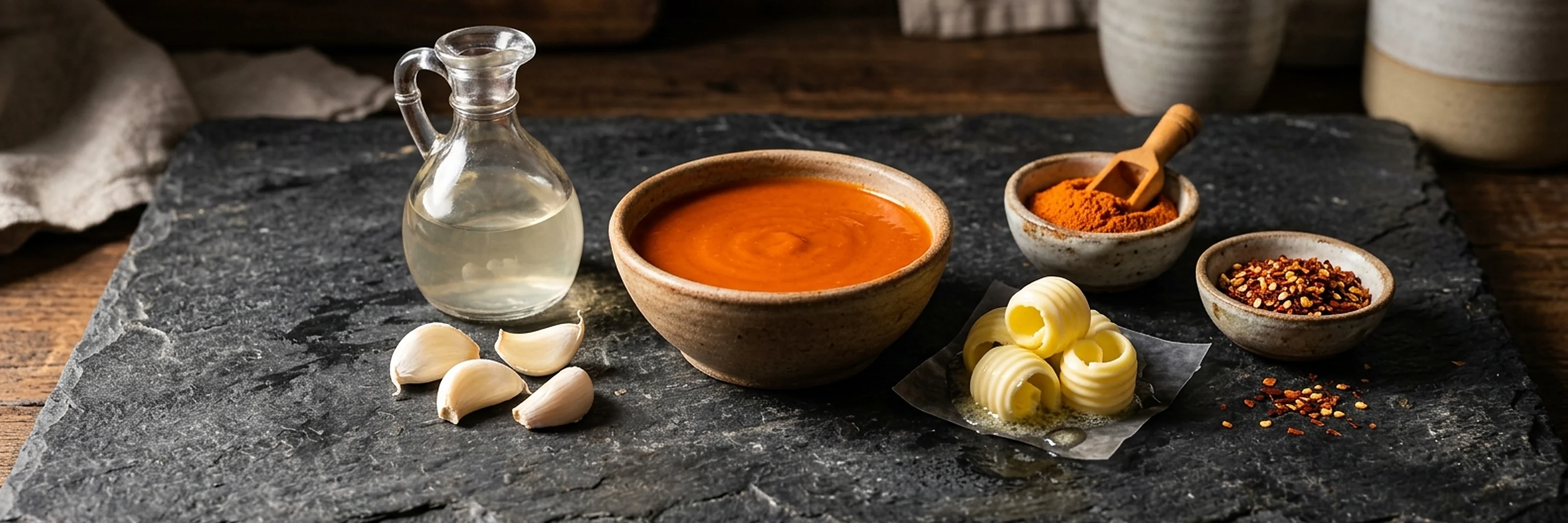
Buffalo sauce contains six primary ingredients. Here's the pregnancy safety status of each:
- Aged cayenne red peppers: Safe. Spicy foods are not contraindicated during pregnancy. Capsaicin does not cross the placenta in meaningful amounts. Long-standing folk beliefs that spicy food during pregnancy causes harm are not supported by research.
- Distilled white vinegar: Safe. White vinegar is a fermented product but fully pasteurized. No pregnancy concerns.
- Water: Safe.
- Salt: Safe in normal dietary amounts. The sodium concern is about cumulative daily intake, not buffalo sauce specifically.
- Garlic powder: Safe. Fresh garlic in large amounts has been studied for various effects, but garlic powder at condiment levels is of no concern.
- Butter (in pre-made wing sauces): Safe. Pasteurized dairy products are safe during pregnancy — unpasteurized dairy is the concern, and butter is a pasteurized product.
There are no pregnancy-specific safety concerns with any component of standard buffalo sauce.
The Real Practical Concerns
While buffalo sauce is ingredient-safe, practical concerns during pregnancy are worth noting:
- Heartburn and acid reflux: Pregnancy commonly causes heartburn because hormones relax the esophageal sphincter (the muscle that prevents stomach acid from rising). Spicy, acidic foods like buffalo sauce can trigger or worsen this. If you experience heartburn: reduce portion size, consume with dairy (which buffers acid), and avoid buffalo sauce close to bedtime when reflux is worse lying down.
- Sodium intake: The American Heart Association recommends 2,300mg sodium per day for adults — 1,500mg per day for people with certain conditions. Buffalo sauce contributes approximately 190–240mg per tablespoon. Frequent or large consumption can contribute meaningfully to daily sodium totals, which matters more during pregnancy as many providers recommend moderate sodium intake.
- Digestive discomfort: Some pregnant people find that spicy foods cause digestive upset — loose stools, cramping, or nausea — particularly in the first trimester. This is individual and not harmful, but may be a reason to moderate intake based on personal tolerance.
Buffalo Sauce Concerns During Pregnancy
| Concern | Is It Real? | Practical Guidance |
|---|---|---|
| Harm to baby from capsaicin | No evidence | Not a concern — spicy food is safe |
| Sodium accumulation | Yes, if eating large amounts | Moderate portion size, track daily sodium |
| ★ Heartburn/acid reflux | Yes, common trigger | Reduce if causing symptoms |
| Dairy allergen in butter | Only if allergic | Check labels; dairy in butter is minimal |
| Food safety of aged peppers | Safe | Commercial hot sauces are pasteurized |
Sodium Considerations
Sodium is the most valid practical concern with buffalo sauce during pregnancy. A typical serving of buffalo sauce (3 tablespoons for tossing 6 wings) contains approximately 570–720mg of sodium — roughly a quarter to a third of a day's recommended maximum.
If your provider has recommended sodium moderation during pregnancy:
- Track your total daily sodium, not just from buffalo sauce
- Consider lower-sodium hot sauces as a base (Crystal Hot Sauce has 160mg/tsp vs. Frank's 190mg/tsp)
- Use homemade buffalo sauce where you control the salt addition
- Reduce the amount of sauce per serving
Managing Heartburn with Buffalo Sauce
If you want to continue enjoying buffalo sauce but are experiencing pregnancy-related heartburn:
- Pair with dairy: Blue cheese or ranch alongside wings isn't just traditional — the dairy proteins buffer stomach acid and reduce reflux likelihood.
- Choose milder sauces: Sweet Baby Ray's Buffalo and other mild commercial sauces have lower capsaicin concentrations.
- Eat earlier in the day: Heartburn is typically worse in the evening and at night. Eating spicy foods at lunch rather than dinner reduces symptoms.
- Smaller portions more frequently: Large meals stretch the stomach and worsen reflux regardless of food type.
⚠️ Consult Your Healthcare Provider
This page provides general information about buffalo sauce ingredients and common pregnancy considerations — it is not medical advice. If you have specific pregnancy conditions (gestational hypertension requiring sodium restriction, diagnosed GERD, food allergies), discuss your specific dietary needs with your OB, midwife, or registered dietitian. Individual pregnancy circumstances vary significantly.