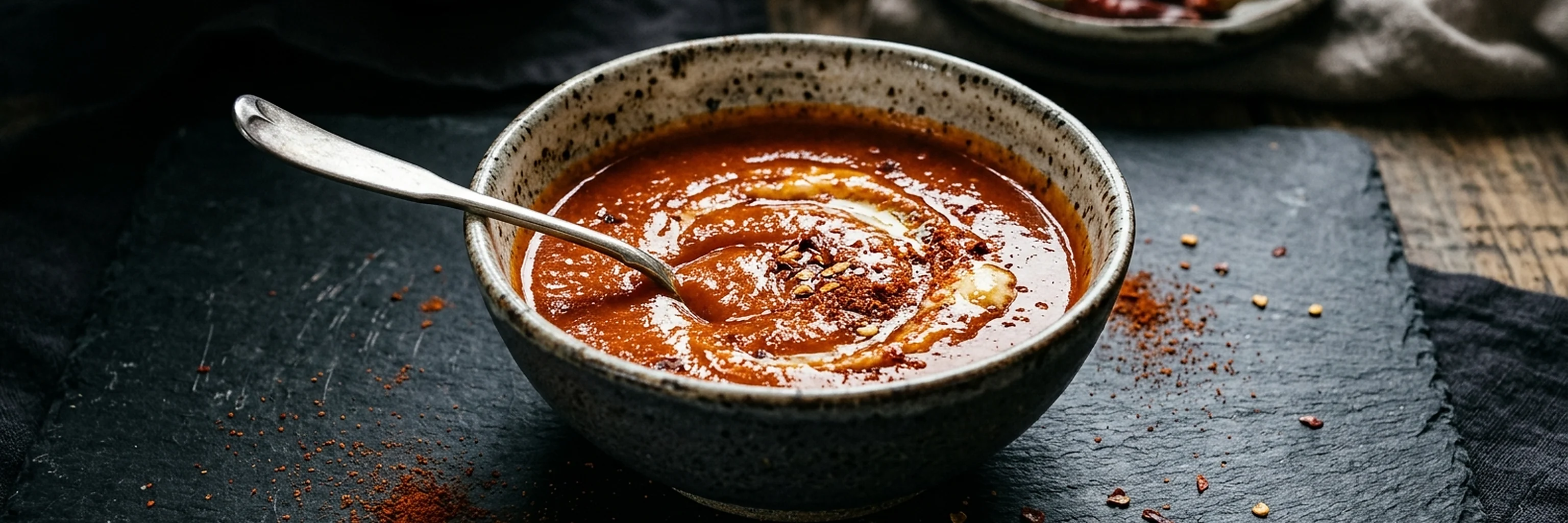
Quick Answer
How do you make orange buffalo sauce?Reduce 1/2 cup of fresh-squeezed orange juice with 1 teaspoon of orange zest down to 2 tablespoons (about 5–7 minutes at medium heat). This concentrates the orange flavor 4-fold and removes the water that would thin the sauce. Cool slightly, then add to a standard buffalo sauce (Frank's RedHot + butter) off-heat. The orange zest provides aromatic compounds that the juice alone can't deliver; the reduction intensifies the flavor. The result is a sauce with genuine citrus-orange character, mild sweetness from the natural sugars, and the familiar buffalo heat — closer to Asian orange chicken flavor than traditional buffalo, but without losing the wing-sauce identity.
Why Orange and Cayenne Work Together
Orange and cayenne pepper is a centuries-old flavor combination used across many cuisines — Moroccan tagines, Mexican moles, Southeast Asian marinades. The reasons the pairing succeeds:
- Citrus acid moderates heat perception: Citric acid (from orange) changes how capsaicin is perceived — not by reducing the amount of capsaicin, but by activating different acid-sensitive receptors alongside the heat receptors. The result is a more complex heat experience: the orange's brightness and the cayenne's warmth create a dimension that neither provides alone.
- Terpene synergy: Limonene (the primary aromatic compound in orange peel) has a complex interaction with capsaicin that many people describe as making the heat feel "brighter" or "more vibrant" rather than hotter. This is the same compound class that makes orange and chili combinations a natural pairing across global cuisines.
- Sugar-acid-heat balance: Orange's natural sugars provide sweetness that rounds out the sauce; its acid provides brightness; cayenne provides heat. The three together — sweet, bright, hot — create a complete flavor profile without additional sweeteners or acids.
- Orange chicken crossover: American-Chinese "orange chicken" has made the orange-sweet-spicy flavor combination very familiar. Orange buffalo sauce can serve the same audience — people who enjoy orange chicken flavors but want a buffalo sauce application.
The Orange Reduction
Fresh orange juice is approximately 85% water. Adding full-volume orange juice to buffalo sauce would thin it significantly and add too much water. The solution is to reduce the juice first:
- Start with 1/2 cup fresh-squeezed orange juice. Bottled works but fresh is significantly more flavorful.
- Add 1 teaspoon of orange zest to the juice before reducing — zest's essential oils extract into the juice during the reduction.
- Simmer over medium heat (gentle bubbles, not rolling boil) until reduced to 2 tablespoons — about 5–7 minutes. Watch carefully; the last 30 seconds before reaching the target volume can shift quickly from "reduced" to "overreduced." The reduced juice should be slightly syrupy.
- Cool for 5 minutes before incorporating into the hot sauce-butter mixture. Adding hot reduction directly into hot emulsified sauce can cause separation.
Ingredients
- 1/2 cup Frank's RedHot Original
- 3 tablespoons unsalted butter
- 1/2 cup fresh orange juice (about 2 navel oranges)
- 1 teaspoon orange zest (from the same oranges)
- 1 teaspoon honey (amplifies orange's sweetness)
- 1/4 teaspoon garlic powder
- Pinch of ginger powder (optional — enhances the Asian character)
Method
- Juice the oranges to get 1/2 cup juice. Zest before juicing. Combine orange juice and zest in a small saucepan.
- Simmer over medium heat until reduced to 2 tablespoons, about 5–7 minutes. The reduction will smell intensely of orange — this is correct. Remove from heat and let cool 5 minutes.
- In a separate small saucepan, combine Frank's RedHot, garlic powder, and ginger powder if using. Warm over medium-low heat for 2 minutes.
- Reduce heat to low. Whisk in butter in small pieces until fully emulsified.
- Remove from heat. Add the cooled orange reduction and honey. Stir well to incorporate.
- Taste and adjust: more honey for sweeter character; more Frank's for more heat and acidity; more orange zest (added at the end) for more orange fragrance.
- Use immediately or refrigerate up to 4 days. The orange character mellows slightly after 24 hours — still good, just less vibrant.
Tips
- Blood orange juice makes a visually dramatic variation — the deep red-orange pigmentation from anthocyanins produces a sauce with a beautiful deep color. The flavor is similar to navel orange with slightly more complexity and mild tartness. Use blood oranges when in season (November–March) for a seasonal variation.
- For the Asian-inspired version: add 1 teaspoon of soy sauce to the hot sauce base and 1/4 teaspoon of sesame oil off-heat at the end. This creates an orange sauce that reads distinctly as 'Asian-American' rather than 'buffalo-citrus' — good for different applications than the standard wing format.
- The orange reduction can be made 2–3 days ahead and refrigerated. Bring to room temperature before incorporating into the final sauce.
💡 The Orange Chicken Comparison
Orange buffalo sauce occupies the same flavor territory as American-Chinese orange chicken sauce — orange, sweet, mildly spicy. The differences: orange buffalo sauce has more vinegar acidity (from Frank's RedHot), less sweetness, and uses butter rather than starch as the thickener. It won't replicate the gloppy, very sweet coating of Chinese-American orange chicken, but it's a sophisticated version of the same flavor concept. Serve orange buffalo sauce on crispy chicken bites or wings for a format that appeals to orange chicken fans while delivering a more complex, adult flavor profile.
Best Applications
Orange buffalo sauce's sweet-citrus character opens up applications beyond traditional wings:
- Chicken wings: The original. Orange buffalo wings pair naturally with a light sesame seed garnish and a scallion topping rather than the traditional celery-blue cheese.
- Shrimp: Orange and shrimp is a natural pairing. Orange buffalo shrimp served over rice with cucumber ribbons is an elegant quick dinner.
- Duck: Orange and duck is a classic French combination (duck à l'orange). Orange buffalo duck legs or wings (roasted at 375°F for 45 minutes) is an interesting high-end variation.
- Asian fusion bowls: Toss seared chicken or tofu in orange buffalo sauce, serve over rice with edamame, cucumber, and sesame seeds — a flavor bridge between Chinese-American and American buffalo traditions.