Quick Answer
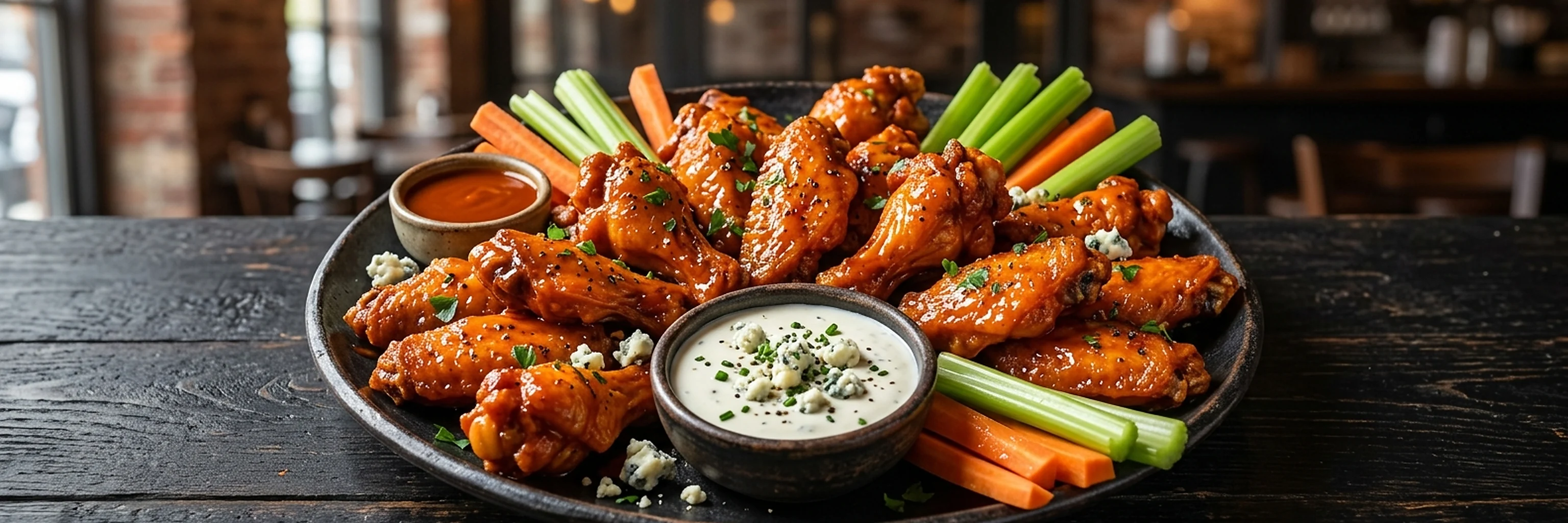
What are the traditions around wing night and why do they exist?Wing night traditions evolved in American bar culture from the 1980s onward, when buffalo wings became a standard sports bar offering. Key traditions: wings are ordered in multiples (not individually), shared at the table rather than served individually plated, accompanied by communal blue cheese or ranch dipping, paired with beer, and eaten while watching sports. The 'wing night special' (discounted wings on specific nights, typically Monday, Tuesday, or Thursday) developed as a bar traffic driver on slow nights. Home wing nights mirror the sports bar format: communal watching, communal eating, multiple sauce options. The communal aspect of wing eating — everyone reaching into the same pile — is central to the social tradition.
The Sports Bar Wing Night Ritual
The sports bar is where modern wing night culture was shaped. The specific dynamic:
- Group ordering: Wings at a sports bar are almost always ordered for the table, not individually. A group orders a combined total based on how many people are at the table, the wings are delivered to the center, and everyone takes from the communal pile. This communal eating structure is fundamental to the experience.
- Volume ordering: Wings are ordered in increments of 10, 12, or 20 depending on the restaurant. Ordering "12 hot" and "12 medium" for a table of four is standard — the ability to customize heat levels for different people is built into the ordering system.
- Beer integration: Cold beer is assumed. The salt, spice, and fat of buffalo wings are a textbook pairing for cold beer — each serving a functional purpose for the other. Wings make you want beer; beer palate-cleanses for more wings.
- Game orientation: The activity during wing night is watching a game — football (especially), basketball, baseball. Wings are consumed over the duration of the game (2–4 hours) rather than at a single meal moment. This grazing pattern makes wings ideal: they remain enjoyable for an extended period, they don't require sustained attention to eat, and they can be paused and resumed.
- The sauce discussion: Choosing heat levels is a ritual in itself. The negotiation between the person who wants mild and the person who wants suicidal is a standard wing night social dynamic — usually resolved with multiple heat levels on the table simultaneously.
Wing Night Specials: The Economics of Discounted Wings
"Wing night" specials (discounted wings on specific nights) became a standard bar promotion strategy from the 1980s onward:
- The Monday/Tuesday/Thursday tradition: Monday Night Football made Monday the dominant wing night in sports bars nationally. Tuesday and Thursday became wing night alternatives at establishments without MNF focus — slow bar nights that benefited from traffic-driving promotions.
- The 25-cent wing era: In the 1990s, 25-cent wings during happy hour was a common promotion at bars across the country. This price point drove enormous wing consumption and established wings as the definitive cheap-but-satisfying bar food. Wing prices have risen substantially since (commodity chicken wing prices spiked dramatically post-COVID), and 25-cent wings are extremely rare today.
- Buffalo Wild Wings' "Wing Tuesday": Buffalo Wild Wings specifically promoted Tuesday as wing day for years, with discount pricing. The promotion became nationally recognized and drove significant Tuesday dinner traffic specifically to BWW locations.
- The promotional calculus: Wings as a loss-leader or break-even item on wing night nights generate beverage revenue. A table ordering $15 of wing specials but $40 of beer is a profitable transaction. The wing night special is a beer sales strategy as much as a food strategy.
| Wing Night Setting | Typical Order Size | Heat Strategy | Primary Activity |
|---|---|---|---|
| Sports bar (game night) | 30–50 pieces for 4–6 people | Multiple levels — medium/hot | Watching the game |
| Home Super Bowl party | 10–15 per person | Multiple levels, self-sauce | Social viewing |
| Casual Tuesday wing night | 10–15 per person | Usually medium | Hanging out, catching up |
| Wing festival/competition | Sample sizes | Full range including extreme | Sampling, competing |
| Restaurant bar date | 20 pieces for 2 | Aligned heat levels | Conversation |
Home Wing Night Culture
Home wing nights have grown alongside sports bar culture, particularly since the mid-2000s when large-screen TVs and quality home fryers made restaurant-quality wings more achievable at home:
- The home fryer vs. air fryer debate: Home deep fryers can produce restaurant-equivalent wings but require oil management and disposal. Air fryers (popularized from 2016 onward) create nearly comparable results without oil management, and have become the dominant home wing cooking method.
- Pre-game timing: The established home wing night ritual is wings ready during the first quarter or halftime of the game — not before it starts (too early to be fully enjoyed in pre-game analysis mode) and not late in the game (when attention is too focused for the communal eating ritual to work).
- The sauce station: Many home wing night hosts set up a sauce station with multiple dipping options and heat levels. Frank's + butter (standard), honey buffalo (for milder palates), blue cheese and ranch for dipping — the full spread is part of the hosting tradition.
- Supplementary foods: Home wing nights typically include wings plus a "spread" — celery and carrots, nachos or chips and dip, possibly pizza or sliders. Wings alone are the highlight but aren't the only food.
Wing Night Etiquette
Unwritten rules that govern wing night social dynamics:
- Don't double dip: The communal blue cheese or ranch bowl is shared. Double dipping is universally frowned upon in American casual dining culture and particularly at wing night where everyone is eating the same food in close succession.
- The drum vs. flat debate: Drumettes (the meaty drum section) vs. flats (wingettes, with two bones) is a genuine preference divide. "Flat tax" (ordering flats for someone who takes drums) is a common wing night joke. Good wing night etiquette is equal distribution of drums and flats to the group.
- Heat level courtesy: Ordering all-suicidal wings when people at the table haven't indicated heat tolerance is bad wing night etiquette. The convention is multiple heat levels or the group's discussed preference.
- Cleaning bones: Chicken wing bones should be cleaned fully — leaving meat on the bones is considered poor technique. Competitive wing eaters are the extreme version of this; regular etiquette just means eat the whole wing.
- Sauce sharing at home: The host's sauce decision sets the tone. If you're making wings at home, provide at least two heat options so guests with different tolerances can participate.
💡 The Perfect Wing Night Timing
Optimal home wing night sequence: start wings in the air fryer or oven 40 minutes before you want to eat. Prep sauce, celery, and dipping options during the cook. Wings come out right when the game is heating up (typically 15–20 minutes into the first quarter if cooking during kickoff). The first batch serves as the immediate consumption wave; keep remaining uncooked wings for halftime to ensure fresh wings through the game. Never try to make all wings simultaneously — they don't hold well for more than 20–30 minutes before the sauce makes the skin soft.