Quick Answer
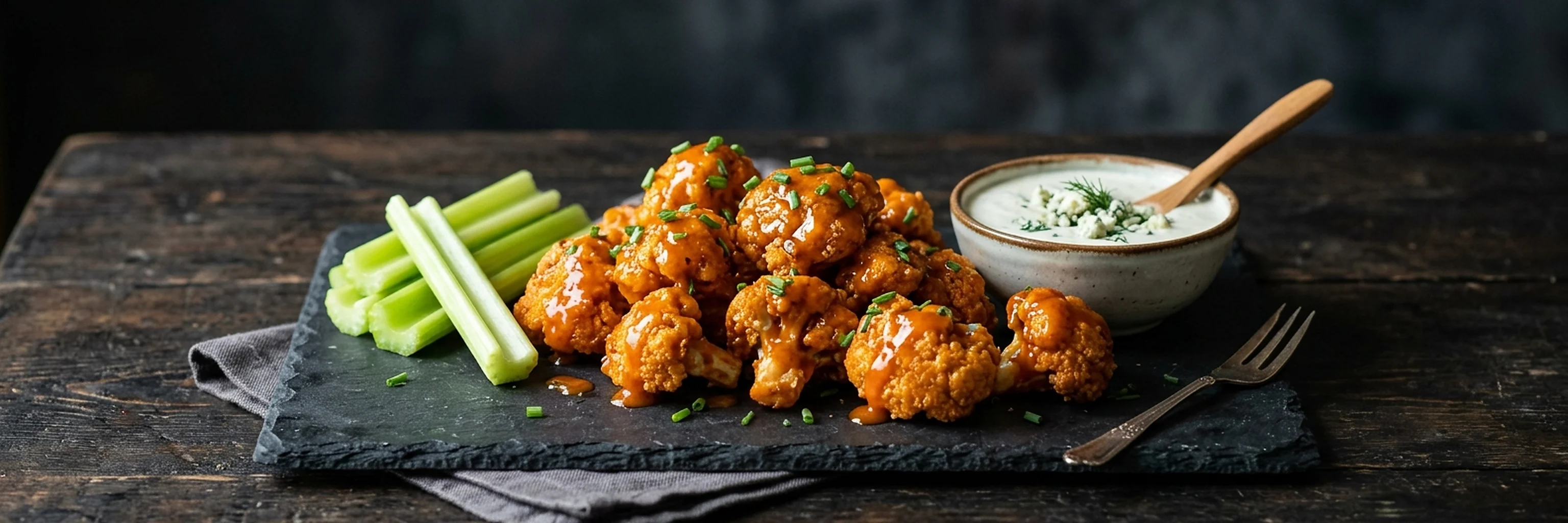
Why has buffalo sauce become such a dominant flavor in vegan and plant-based cooking?Buffalo sauce works exceptionally well in vegan cooking for a structural reason: the flavor is carried entirely by the sauce, not the protein. Classic buffalo sauce (hot sauce + butter) is easily made vegan by substituting plant-based butter (Earth Balance, Miyoko's, or similar), and the resulting sauce is functionally identical in flavor. The challenge in vegan buffalo is texture — reproducing the crispy exterior and satisfying bite of fried chicken wings using plant-based protein. Cauliflower wings solved this by finding a vegetable that takes breading and frying well and has sufficient structural integrity. The result was so successful that cauliflower wings became one of the first widely accepted plant-based alternatives to a specific meat dish.
Why Buffalo Sauce Translates to Vegan Cooking
The structural reason buffalo sauce converts to vegan preparation better than most meat-associated flavor profiles:
- The protein is irrelevant to the flavor: In a traditional buffalo wing, the chicken itself contributes relatively little flavor — the work is done by the sauce. This means buffalo sauce's flavor profile is fully portable to any protein (or protein substitute) that can hold the sauce and provide the textural experience. This is not true of, say, pulled pork — the pork's specific fat rendering and collagen breakdown contribute essentially to the dish. In buffalo wings, the protein is primarily a sauce delivery vehicle.
- The sauce is already almost vegan: The traditional Frank's + butter formula requires only one substitution (plant-based butter) to be fully vegan. Many hot sauces including Frank's are already vegan. The most common hot sauce brands contain no animal products. The "vegan buffalo sauce" conversion is genuinely trivial — swap the butter.
- Plant-based butter has improved dramatically: Miyoko's Creamery vegan butter, Earth Balance, and similar products now produce emulsified buffalo sauce that is nearly indistinguishable from butter-based original in both flavor and texture. The emulsification behavior is similar; the fat content is sufficient; the flavor contribution is close. This wasn't true of earlier vegan margarines.
- Texture is the solved problem: The genuine challenge in vegan buffalo is texture — the crispy exterior, the slightly chewy interior, the way the fried chicken skin holds the sauce. This is where different plant-based proteins have different success rates, and where cauliflower emerged as the most effective early solution.
The Cauliflower Wing Phenomenon
Cauliflower buffalo wings became one of the most significant plant-based food trends of the 2010s:
- Why cauliflower works: Cauliflower florets, when battered and fried or baked at high heat, develop a crispy exterior and a slightly softened but firm interior. The texture is not identical to chicken, but it's satisfying in a similar way — there's bite, there's contrast between exterior and interior, and there's sufficient structure to hold the sauce. Cauliflower also absorbs flavors well and has a mild enough natural flavor that the buffalo sauce completely dominates, exactly as it does with chicken.
- The rise timeline: Cauliflower buffalo wings appear to have originated in the restaurant scene around 2011–2013, spreading through vegan restaurants and health-focused dining. By 2015–2016, they were appearing on mainstream restaurant menus. By 2020, essentially every restaurant with a vegan or vegetarian menu option included some version of buffalo cauliflower. The trajectory from vegan niche to mainstream menu item took roughly 5–7 years.
- Commercial products: Frozen cauliflower buffalo wings became a significant grocery category — Trader Joe's, Whole Foods 365, and major brands all developed frozen buffalo cauliflower products. The commercial success of frozen cauliflower wings validated the dish as a mainstream, not just health-food, product.
- The legitimacy debate: Buffalo wing purists frequently object to cauliflower wings being called "wings" — they're not chicken, they're not wings anatomically, and the comparison sets false expectations. This debate mirrors other food naming controversies (veggie burgers vs. burgers, non-dairy milk vs. milk). The pragmatic view: cauliflower buffalo is its own dish that happens to use the buffalo flavor profile and a vaguely similar format; it should be evaluated on its own merits rather than as a chicken replacement.
| Vegan Buffalo Protein | Texture Quality | Sauce Adherence | Mainstream Adoption |
|---|---|---|---|
| Cauliflower | Good — crispy exterior, firm interior | Excellent with proper batter | Very high |
| Jackfruit | Pulled/shredded — different from wings | Good | High |
| Tofu (extra-firm, pressed) | Good when well-dried and fried | Excellent | Moderate |
| Seitan (wheat gluten) | Excellent — most chicken-like texture | Excellent | Moderate (gluten concern) |
| Chickpea fritters | Good — crumbly but holds sauce | Good | Moderate |
| Oyster mushrooms | Meaty, slightly chewy | Excellent | High |
Other Plant-Based Buffalo Proteins
Beyond cauliflower, the vegan buffalo format has been applied to multiple plant-based proteins:
- Jackfruit: Young jackfruit (canned in brine or water, not sweetened syrup) shreds and pulls in a way that mimics pulled chicken. Buffalo jackfruit in tacos, sandwiches, and over rice has become a widely adopted vegan preparation. Jackfruit's texture is not identical to shredded chicken but is similar enough that the comparison holds. Its mild flavor means buffalo sauce completely defines the dish.
- Seitan: Wheat gluten-based seitan has the most convincing chicken-like texture of any plant-based protein — slightly chewy, fibrous, with good bite. Buffalo seitan is considered by many vegan cooks to be the highest-quality chicken substitute specifically for this application. The downside is that seitan requires gluten, excluding people with celiac disease or gluten sensitivity.
- Oyster mushrooms: Large oyster mushrooms, when battered and fried, produce a meaty, slightly chewy result with enough surface area for good sauce coverage. Oyster mushroom buffalo is increasingly common at plant-forward restaurants, often presented as "oyster mushroom wings." The mushroom flavor adds an earthy note that complements buffalo sauce's tang.
- Tofu: Extra-firm tofu, pressed to remove moisture, then battered and fried or baked at high heat, can produce very good buffalo texture. The key is thorough pressing — inadequately pressed tofu steams rather than fries. Well-executed buffalo tofu is a legitimate option, though less visually distinctive than cauliflower or mushroom preparations.
Market and Cultural Impact of Vegan Buffalo
The vegan buffalo trend has had measurable effects on both the plant-based market and mainstream food culture:
- Gateway dish for plant-based adoption: Buffalo cauliflower has been cited by multiple food service and consumer research sources as one of the most effective "gateway" plant-based dishes — items that non-vegans will order and enjoy, converting them to occasional plant-based eaters. The flavor familiarity (buffalo sauce is well-known and loved) reduces the barrier to trying an unfamiliar protein. The dish works as an introduction because the experience is genuinely good rather than a sacrifice.
- Menu cross-over: The success of vegan buffalo options encouraged restaurants to develop other vegan versions of traditionally meat-based dishes. The proof of concept that plant-based buffalo could work commercially motivated broader vegan menu development, particularly at casual dining chains that added vegan buffalo items alongside existing chicken offerings.
- Plant-based butter product development: The demand for vegan buffalo sauce specifically accelerated the development and improvement of plant-based butter products. Miyoko's Creamery, in particular, developed products with improved emulsification characteristics specifically suited to sauce applications, driven partly by the demand for genuinely functional vegan buffalo sauce.
💡 Making Vegan Buffalo Sauce That Actually Tastes Right
The key to vegan buffalo sauce that matches the original is fat content and emulsification. Use a plant-based butter with high fat content (Miyoko's European-style is ideal, Earth Balance works well) rather than lower-fat spreads. The sauce should be made the same way as traditional buffalo: warm the butter, add Frank's or equivalent, emulsify by whisking vigorously off the heat. The ratio (roughly 2 parts hot sauce to 1 part butter) is the same as the traditional recipe. Avoid oil-based substitutes (coconut oil, olive oil) — they don't create the same emulsion texture and produce a greasier, less cohesive sauce than a real butter substitute.
The Vegan Blue Cheese Problem
The companion challenge to vegan buffalo wings is vegan blue cheese — the traditional accompaniment that is arguably harder to reproduce than the sauce:
- Why blue cheese is hard to veganize: Blue cheese's flavor comes specifically from Penicillium roqueforti mold growing in aged dairy. The tangy, pungent, funky complexity of real blue cheese is extremely difficult to replicate in plant-based form. Most commercial vegan blue cheese alternatives use cashew or tofu base with vinegar and herbs but lack the specific fermented complexity of the original.
- Current vegan blue cheese options: Violife Just Like Blue Cheese is the most widely available commercial option and is reasonably good. Treeline, Miyoko's, and Kite Hill produce cashew-based blue cheese alternatives of varying quality. Homemade cashew-based blue cheese using probiotic cultures can achieve more complexity than commercial versions.
- The ranch alternative: Many vegans substitute ranch dressing for blue cheese in the buffalo wing pairing. Vegan ranch (cashew-based, or using aquafaba) is generally considered easier to make well than vegan blue cheese, and the flavor balance with buffalo sauce works similarly. The ranch-as-substitute trend has also driven some traditional wing eaters to ranch, changing the condiment culture around the dish.